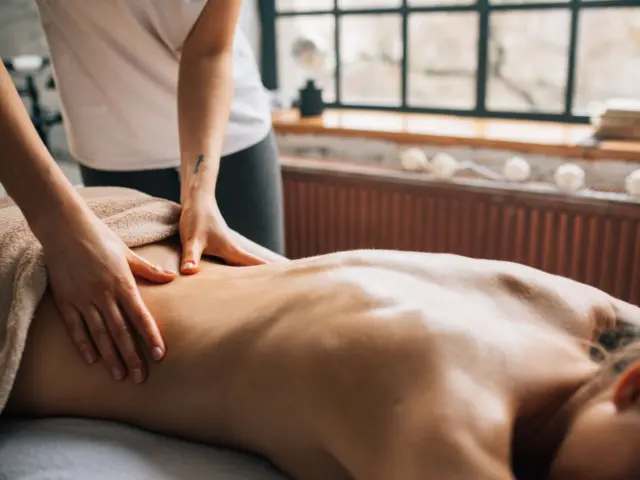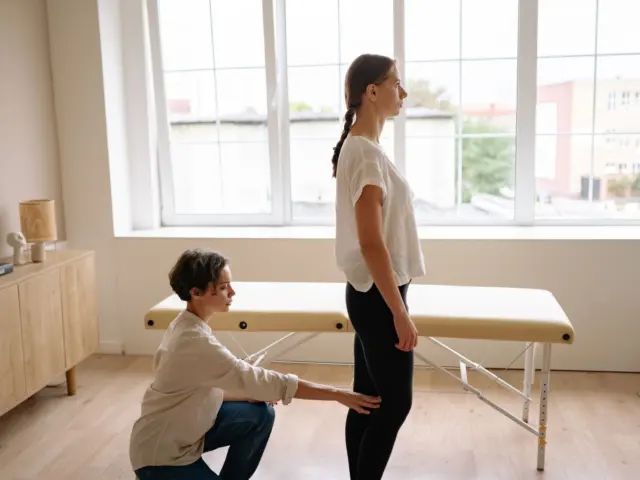
Booked shiatsu expecting oil and a massage table? What is shiatsu massage? A Japanese manual therapy using thumbs, fingers and palms, usually through light clothing, organised around meridians and qi rather than oils and undressing.
Shiatsu sits among the hands-on options in massage therapy and spa treatments, but its clothed, oil-free format and meridian theory set it apart. The sections below take the most common misunderstandings one at a time.
Shiatsu meaning, origins and theory
The word shiatsu translates as “finger pressure”, according to the University of Minnesota’s Taking Charge pages. A college guide quotes the Japanese Ministry of Health definition as manipulation by thumbs, fingers and palms without the use of instruments, and notes that shiatsu derives from anma, a Japanese massage style developed in 1320 by Akashi Kan Ichi.
The modern form is more recent. The University of Minnesota describes shiatsu as developing in the early 1900s, when traditional Japanese manual therapies were integrated with modern Western medical knowledge. The same page calls it Japan’s primary manual therapy and says research is ongoing.
The theory comes from further back. An Osim guide to shiatsu places its philosophical bedrock in traditional Chinese medicine. In that framework, qi flows along specific pathways called meridians, and shiatsu focuses on realigning meridian points and balancing qi. Practitioners therefore work to a map of the body that differs from the muscle-by-muscle logic many people expect from a massage.
Common assumptions about shiatsu
Three assumptions cause most of the confusion: that shiatsu is only thumb work, that it always relaxes, and that it is massage under another name. The table sets each against what the descriptions say.
| Common assumption | What shiatsu involves | Planning use |
|---|---|---|
| It is only thumb pressure | Sustained, rhythmic pressure from fingers, thumbs, palms, elbows, knees and feet | Expect varied contact points, not just thumbs. |
| It always relaxes | The effect may be stimulating and invigorating, or calming and sedative, depending on the goal | Say whether you want to feel energised or settled before the session starts. |
| It is massage with a new name | It goes beyond conventional massage therapy by focusing on restoring balance in the body’s energy systems | Judge a practitioner by their stated approach, not only by how firm the pressure is. |
The descriptions in the table come from the University of Minnesota’s Taking Charge page and the Osim shiatsu guide.
Clothing, oils and the floor-mat format
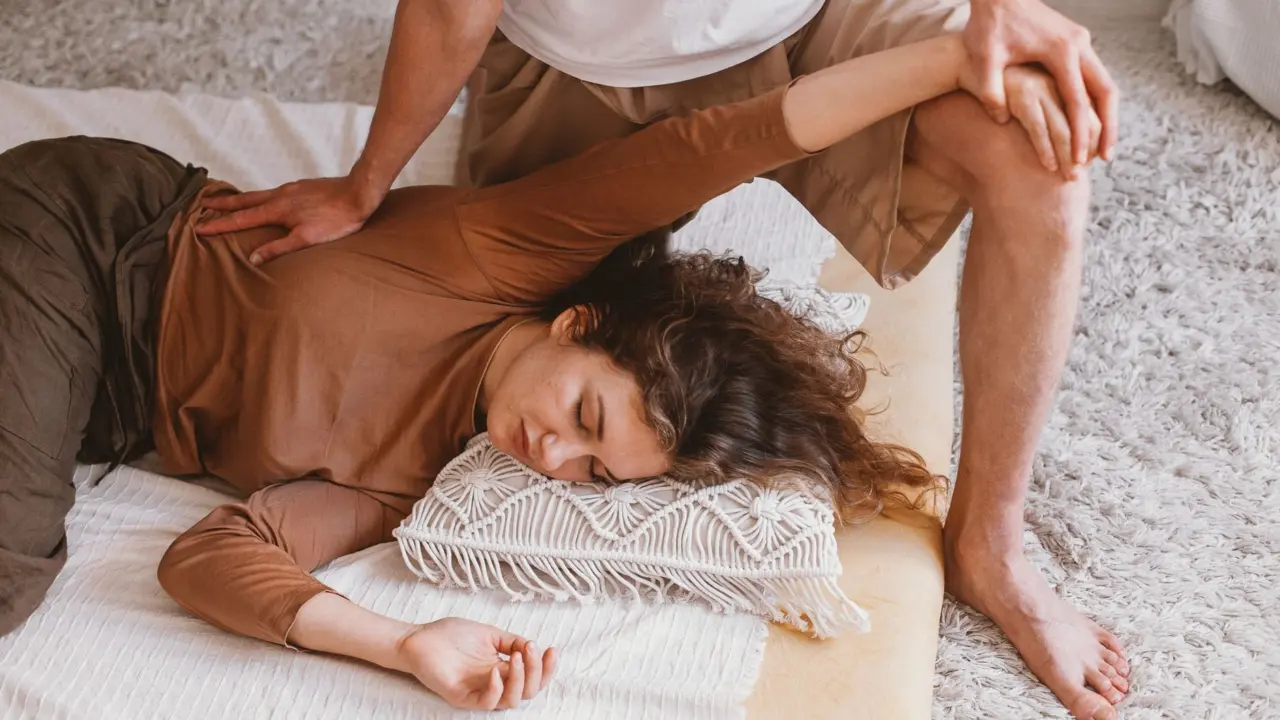
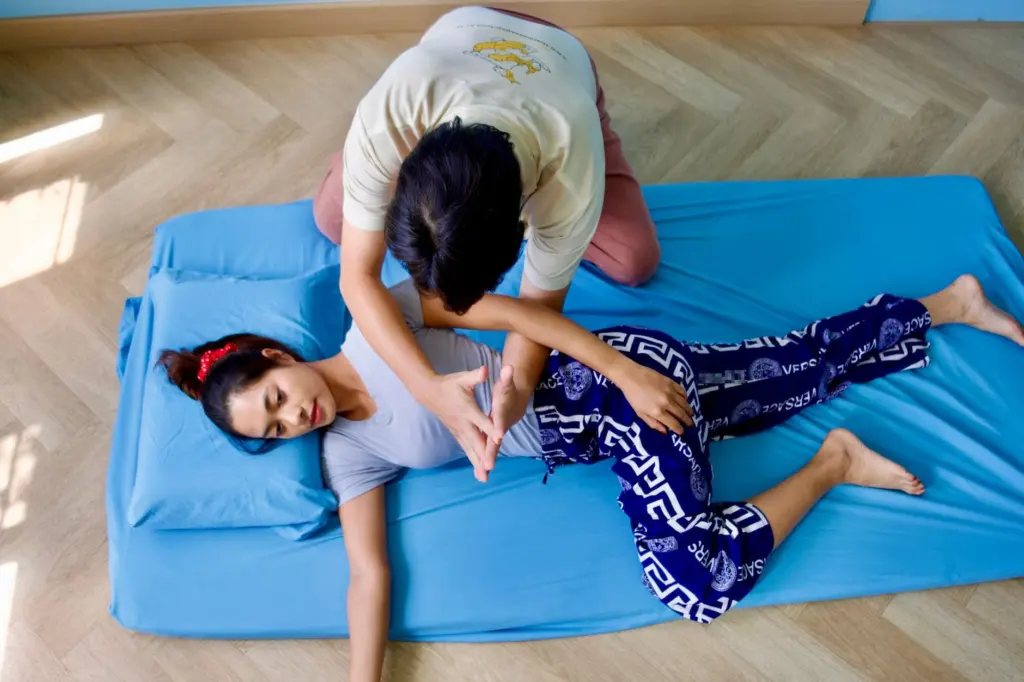
No, shiatsu does not require you to remove your clothes. The University of Minnesota describes it as performed without oils through light, comfortable clothing. That is the practical difference most visitors notice first: no oil, no undressing, and a session built around a clothed client lying on a mat.
The format follows from the technique. Pressure is applied through fabric to meridian points, so oil is unnecessary. Loose clothing that lets you lie comfortably and be moved or stretched is the sensible choice.
In the US, shiatsu is often treated as a subset of massage therapy or of acupuncture, so how it is classified varies. What stays constant is the working method. Shiatsu is a hands-on, oil-free therapy that uses the body map of traditional Chinese medicine instead of treating soft tissue alone.
What happens in a shiatsu session
A shiatsu session begins with assessment, not with pressure. The Osim guide says every session starts with a comprehensive consultation. The University of Minnesota says the practitioner evaluates the client at the start. A typical sequence looks like this:
- Consultation. The practitioner asks about your health and what you want from the session, and this shapes the treatment.
- Assessment. The assessment may include abdominal palpation, known as hara assessment, in which the practitioner’s palms rest on the abdomen.
- Hands-on work. The practitioner uses kneading, pressing, soothing, tapping and stretching techniques, applying sustained pressure to meridian points.
- Held pressure. Pressure is gradual and penetrating and can be held for several seconds, so the pace is slower than a rubbing stroke.
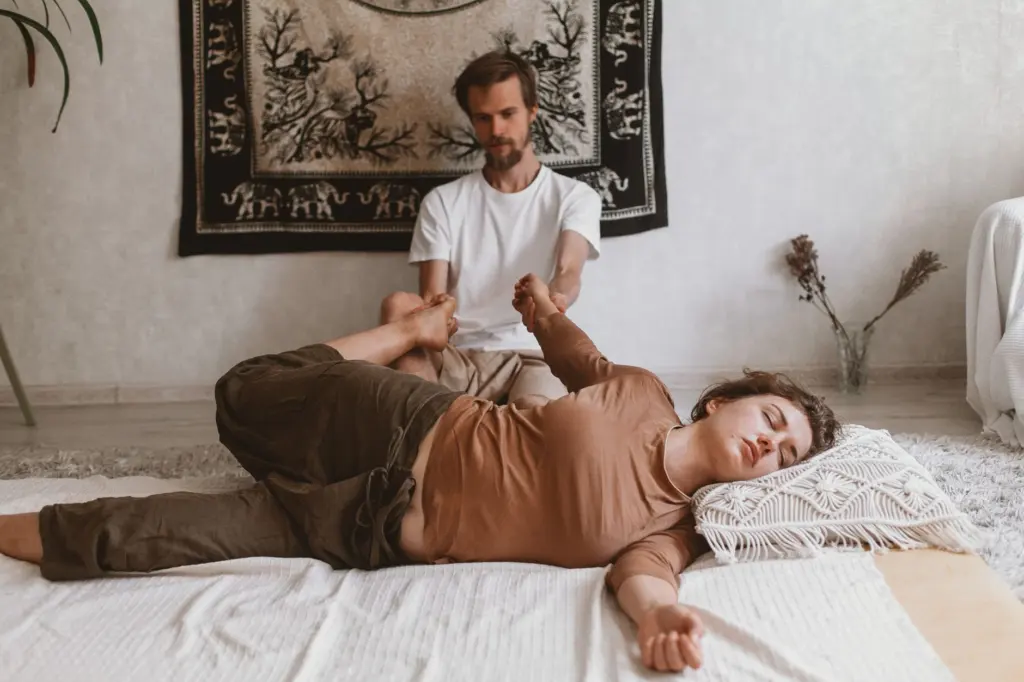
Stretching is part of the repertoire, not an add-on. Because the pressure can come from fingers, thumbs, palms, elbows, knees or feet, the practitioner often moves around the mat to reach the right angle. Pressure should feel gradual and sustained. If anything feels too intense, say so, because the aim is a steady, tolerable pressure, not endurance.
What the evidence supports
The evidence supports the physical side of shiatsu more than its theory. Northwest Career College states that there is no evidence that shiatsu’s metaphysical elements have any benefit, while its physical techniques do have some proven benefits. That separates the two layers clearly. Meridians and qi are the framework practitioners use, not a demonstrated mechanism.
The University of Minnesota is cautious in a different way. It says most of the evidence available in the US is anecdotal, drawn from client and therapist experience, with significant anecdotally reported benefits. That shows research exists, but it does not amount to a body of strong trials.
For a reader deciding whether to try it, this points to realistic expectations. Shiatsu is reasonable to try as a clothed, hands-on session if that format appeals. Claims that it rebalances energy are beliefs of its proponents and are not established by evidence.
Related hands-on therapies
Readers weighing shiatsu against other traditions can compare it with what is thai massage, another clothed, floor-based style. Those drawn to a focused, point-based approach to the body can also read about what is reflexology.
Frequently asked questions
| Question | Answer |
|---|---|
| Is shiatsu a type of acupuncture? | It is often considered a subset of either massage therapy or acupuncture in the US, according to the University of Minnesota, so classification differs by context. |
| Is shiatsu risky? | The University of Minnesota describes the risk as low, alongside significant anecdotally reported benefits and limited formal evidence. |
| Is shiatsu for prevention or treatment? | Proponents believe it has both preventative and remedial effects. That is a belief of its supporters, and the evidence does not settle it. |
| Which organisation represents shiatsu therapists in the US? | The American Organization for Bodywork Therapies of Asia, which the University of Minnesota names as the professional organisation representing shiatsu and Asian bodywork therapists exclusively. |