Quick answer: Massage for headaches suits tension-type headache best, because that type is tied to muscle strain, posture and stress. Migraine calls for a quieter, gentler approach, and any unusual headache should be checked before you book a session.
The rest of this guide matches scalp, skull-base and neck techniques to each headache type. It sits within our wider guide to massage therapy and spa treatments.
Choosing a approach by headache type
The first decision is which headache you are dealing with, because the two common types call for different handling. Tension-type headache is the most common type and is often linked to stress, poor posture or muscle strain. Migraine is a different pattern, and it changes what a comfortable session looks like.
| Feature | Tension-type headache | Migraine | Planning use |
|---|---|---|---|
| Typical sensation | Pressure around the head | Intense, throbbing headache | Pressure around the head points towards muscle-focused work. Throbbing pain calls for caution. |
| Accompanying symptoms | Often linked to stress, poor posture or muscle strain | Nausea, vomiting, sensitivity to light and sound | If light and sound bother you, a busy treatment room is a poor setting. |
| Duration | Varies | A few hours to several days | Plan around an attack that may last well beyond one appointment. |
| Best-fit massage focus | Scalp, skull base, neck and upper trapezius | Gentle neck and shoulder work, ideally between attacks | Match the technique to the type before choosing a therapist or a routine. |
Descriptions of the two headache types follow Aspire Physiotherapy and Deep Tissue Spa; the final column is a practical judgement rather than a sourced figure.
In short, tension-type headache is the type most likely to respond to hands-on work, since the muscles are part of the picture. Migraine is defined by symptoms that massage alone does not address, so treat any massage as comfort for a tight neck, not as a treatment for the attack itself.
Tension-type headache: where to work
Tension-type headache often feels like pressure around the head, which is why the scalp, base of the skull, neck and shoulders are the usual places to work. These areas are connected: the neck muscles help hold up the head all day, and the head weighs about 10 to 12 pounds according to Deep Tissue Spa. Hours at a desk or phone keep those muscles busy, so sore, tight neck muscles are a sensible target when a headache follows a long, stooped day.
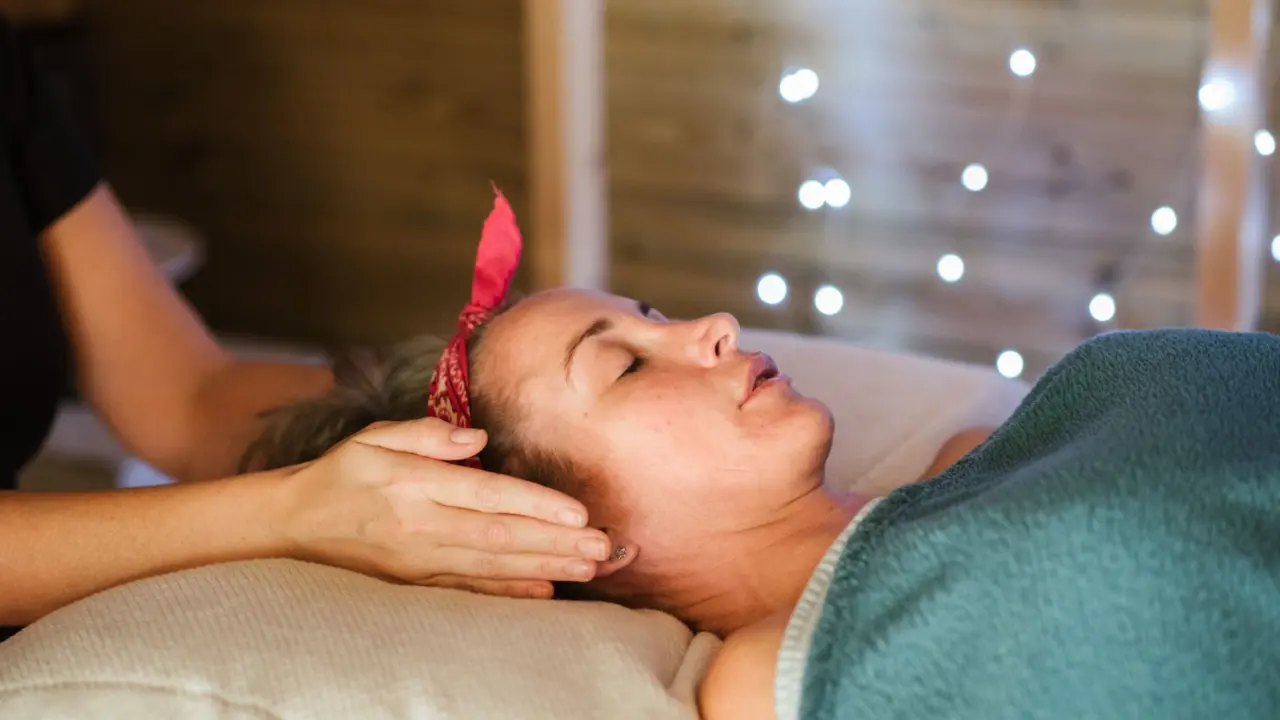
Scalp work
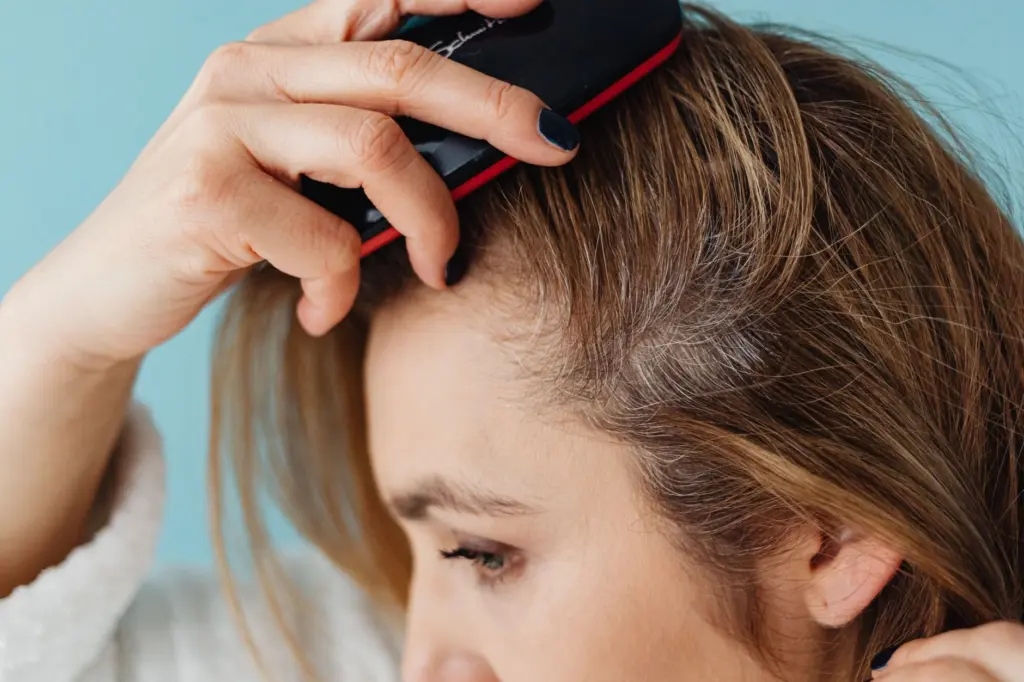
Scalp massage is the easiest starting point because it needs no equipment and can be done seated. Use the pads of your fingertips, move in slow circles across the whole scalp and keep the pressure comfortable. Scalp work suits the band-like pressure of a tension-type headache, and it is a low-risk option when you are not ready for deeper neck work.
Skull base and suboccipital muscles
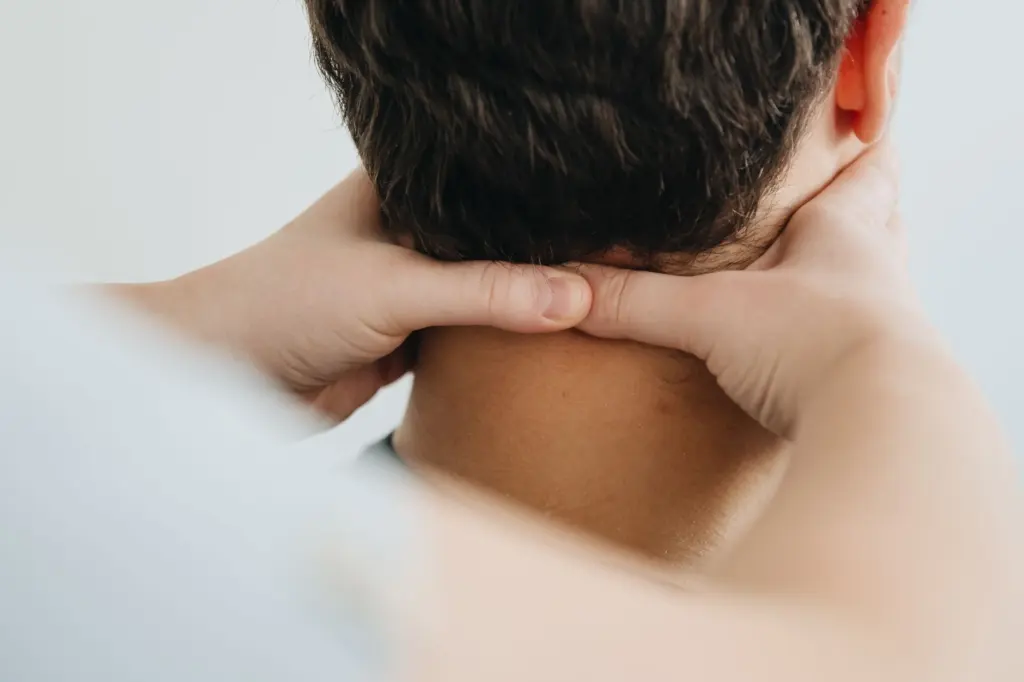
The suboccipital muscles sit at the base of the skull and are a classic target for tension-type headache. PainScience describes reaching under the base of the skull and pressing upwards with the fingertips. The same source notes that most people tolerate strong pressure here, but advises starting slowly.
That advice gives a simple rule: begin light, build gradually and stop if the pain sharpens or spreads. Strong pressure is something many people can tolerate, not a target to aim for.
Neck and upper trapezius
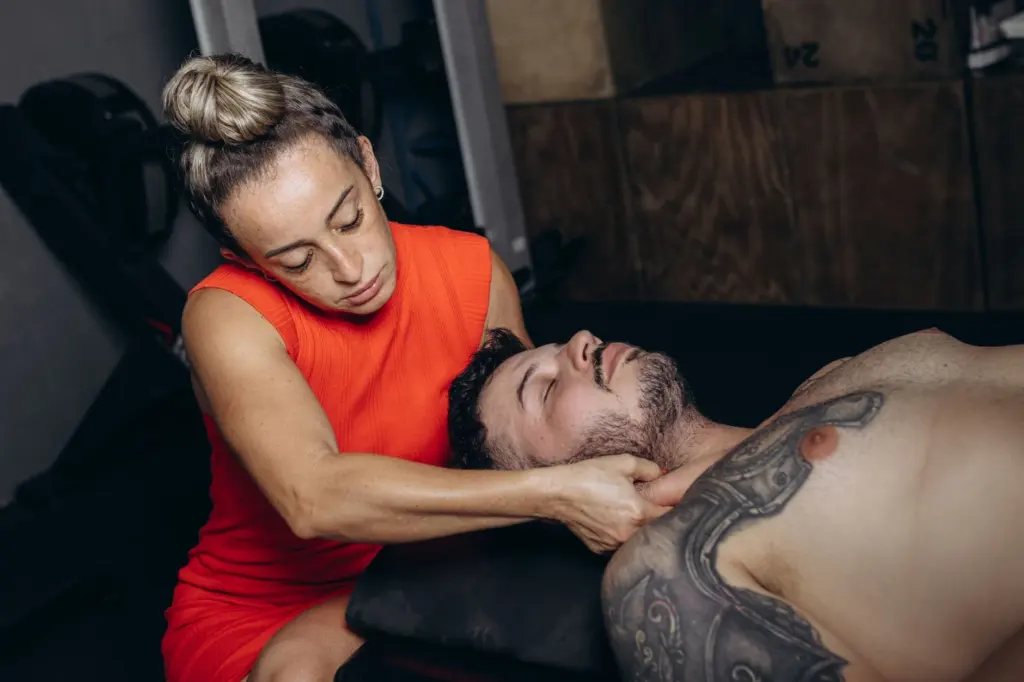
The trapezius runs from the neck across the shoulders, and tightness there often sits alongside tension in the muscles at the skull base. Working along the side and back of the neck and over the top of the shoulders makes sense after the scalp and skull base, because it addresses the muscles that carry the head. If you want to go further into tender spots, trigger point massage covers that technique in more detail.
Migraine: comfort first
Migraine is described as intense, throbbing headache often accompanied by nausea, vomiting and sensitivity to light and sound, and attacks can last from a few hours to several days, according to Aspire Physiotherapy. Because light and sound are part of the problem, the environment matters as much as the technique.
During an attack, a dark, quiet room is the more sensible priority than any massage. If gentle neck contact feels welcome, keep it light and brief, and stop when it adds to the discomfort. Deep or strong pressure during an attack is not a supported choice.

Between attacks, gentle neck and shoulder massage is the more practical use. It may ease muscle tightness around the neck, which is a separate issue from the migraine itself. Book a calm, dimly lit setting and ask for a lighter touch than usual.
Pressure, oil and technique choices
Choosing the method comes down to pressure, lubricant and who is doing the work.
- Self-massage: best for the scalp and, with care, the skull base. It lets you control pressure and stop immediately.
- Professional massage: better for the neck and upper trapezius, which are harder to reach on yourself. Tell the therapist which headache type you have so the pressure and room conditions suit it.
- Oil or lotion: useful for gliding strokes over the neck and shoulders, less needed on the scalp. Our guide to the best oil for massage compares the options.
- Pressure level: light at first, then stronger only if it feels relieving. Strong pressure at the skull base is tolerated by most people, but that is a ceiling, not a recommendation.
Troubleshooting a session that is not helping
- The headache worsens during massage: reduce pressure or stop. If the headache is throbbing and comes with nausea or light sensitivity, it may be a migraine, and rest suits it better than hands-on work.
- Relief fades quickly: the cause may be posture or stress rather than muscle tightness alone. Pay attention to how you sit and work, because poor posture and stress are named drivers of tension-type headache.
- Pressure feels too sharp at the skull base: go back to slow, light contact. Starting slowly is the recommended approach even though many people tolerate strong pressure.
- No effect after several tries: change the technique or the target area, then seek a clinical opinion rather than increasing pressure.
When to skip massage and get checked
Massage is for familiar, recurring muscle-type headaches, not for a headache that is new, sudden, severe or unlike your usual pattern. Any of those should be assessed by a doctor first. The same applies if a headache follows a head injury or comes with neurological symptoms such as weakness, confusion or changes in vision or speech. Seek urgent medical help for those, and do not wait for a massage session.
Ask a doctor before starting if your headaches are frequent or getting worse. A therapist can only treat the muscles; a diagnosis comes from a clinician.
Frequently asked questions
Which headache types respond best to massage?
Tension-type headache is the best fit. It is the most common type and is often linked to stress, poor posture or muscle strain, so muscle work on the scalp, skull base and neck is relevant. Migraine involves symptoms such as nausea and light and sound sensitivity, so gentle comfort measures suit it better than deep work.
Is scalp massage for headache worth trying?
Yes, as a low-effort first step for the pressure of a tension-type headache. Use fingertips, keep the pressure comfortable and stop if it makes things worse.
Can neck massage give migraine relief?
Gentle neck and shoulder work may ease muscle tightness around a migraine, but it does not address the migraine itself. During an attack, a dark, quiet room matters more.
How hard should pressure be at the base of the skull?
Start slowly. PainScience notes that most people tolerate strong pressure at the suboccipitals, but begin light and build up.
Should I massage through a headache that feels unusual?
No. A new, sudden, severe or unfamiliar headache should be checked by a doctor before any massage.