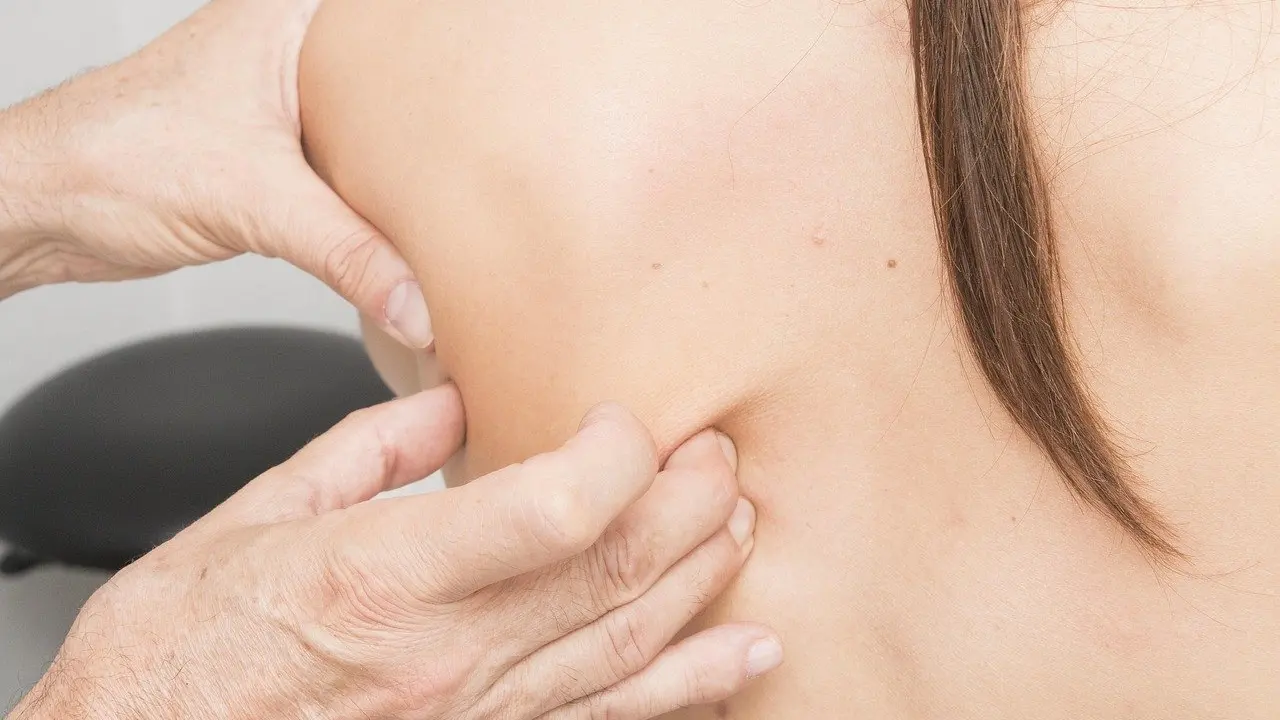
Trigger point massage applies sustained, firm but manageable pressure to a tight spot in a muscle until it eases. It can feel slightly uncomfortable. It differs from myofascial release, which uses slow stretching of the fascia around muscles.
The sections below cover how the technique works, how it compares with other styles, what to expect, and who should check first. For the wider range of treatments, see massage therapy and spa treatments.
What a trigger point is and why it forms
A trigger point is an irritated area in muscle fibres that may cause pain or a twitching response when compressed. That wording is attributed to the American Massage Therapy Association in North Atlanta Spine’s explanation. A clinic description adds that these are taut, hypersensitive bands within a muscle that stay contracted even at rest.
The same explanation lists the usual causes: muscle overuse or repetitive movement, poor posture, stress and injury. That mix explains why trigger points cluster in people who sit at a desk, repeat the same task all day or carry tension in the shoulders. It also explains why pressure alone rarely fixes the cause. If the habit that loaded the muscle continues, the tight spot is likely to return.
Trapezius and neck muscles
The upper trapezius is one of the most common problem areas. Overloading the upper trapezius, the levator scapulae and the small suboccipital muscles at the base of the skull can produce neck stiffness and pain that spreads into the shoulders, according to the same clinic page. This is why a therapist treating shoulder or neck pain often works on the top of the shoulder rather than only where you feel it.
How trigger point massage works
Trigger point massage works by holding pressure on a tight spot until the tissue gives way. The best-known method is ischaemic compression, in which sustained pressure is applied to the trigger point until a release of tension is felt. A typical treatment follows these stages:

- Locate the spot. The therapist feels along the muscle for the taut band and the sensitive point within it, guided by where you feel pain.
- Apply sustained pressure. Thumb, finger or elbow pressure is held on the point. The pressure is firm but manageable, and it helps lengthen the contracted muscle fibres.
- Wait for the release. The pressure stays in place until the tightness softens rather than being rubbed away quickly.
- Stretch the muscle. Pinpoint pressure is combined with stretching, which is what separates this from simple deep pressure.
- Adjust to feedback. The therapist changes pressure according to what you report. Client feedback is helpful while trigger points are worked out.
Because the technique targets one spot at a time, a session may cover only a few areas in detail. That is a practical advantage if you have a clear problem area, and a drawback if you want a general relaxation massage.

Myofascial release and the role of fascia
Myofascial release targets the fascia, the connective tissue surrounding muscles, whereas trigger point massage targets specific tension points, as the American Institute of Alternative Medicine’s training material puts it. Myofascial release uses sustained pressure and stretching to loosen the fascia surrounding your muscles.
In practice the difference is in tempo and area. Trigger point work stays on one small spot and waits. Myofascial work is slower and broader, with the therapist holding a stretch across a wider stretch of tissue and letting it lengthen. The two are often combined, since a muscle with a tight spot may also sit within tight fascia, which is why many practitioners treat them as partners rather than rivals.
Myofascial release vs deep tissue
Deep tissue massage treats broad areas of tension, while trigger point therapy zeroes in on specific knots, according to the clinic’s comparison. Deep tissue uses slow, deep strokes across a region. Trigger point work uses sustained pinpoint pressure plus stretching. Myofascial release sits alongside both, with its focus on fascia rather than the muscle belly alone.
| Technique | Main target | How it is applied | Planning use |
|---|---|---|---|
| Trigger point massage | Specific knots and referred pain | Sustained pinpoint pressure plus stretching | Choose it when you can point to one or a few sore spots |
| Myofascial release | Fascia, the connective tissue around muscles | Sustained pressure and stretching to loosen the fascia | Choose it when stiffness feels widespread or tissue feels restricted |
| Deep tissue massage | Broad areas of tension | Slow, deep strokes | Choose it when a whole region, such as the upper back, feels tight |
The comparison draws on AIAM’s description of the two techniques and a clinic’s contrast with deep tissue.
If you are unsure which to book, describe the problem to the therapist. A single sore spot points to trigger point work. A general sense of tightness points to deep tissue or myofascial release. Many therapists blend the methods within one session.
Does trigger point massage hurt?
It can be slightly uncomfortable, but the aim is relief and improved movement, as North Atlanta Spine describes it. Expect a firm, focused pressure that is strong but manageable. Sharp, rising or unbearable pain is not the target and is a reason to speak up.
You are part of the process. Tell the therapist when pain increases, because pressure can be reduced while the point still gets worked. Myofascial release is generally slower and sustained, so the sensation is usually a stretching pull rather than a pinpoint ache, though that is a practical distinction rather than a promise for every client.
Trigger point massage for back and neck pain
Trigger point massage is a reasonable option when back or neck pain comes from tight, sensitive muscle spots, especially in the upper trapezius and nearby neck muscles. Clinics and training schools describe relief and better movement after treatment. Those are practitioner descriptions, not trial results, so treat the technique as a sensible way to ease muscular tension rather than a guaranteed cure.

The upper back and shoulders are the clearest fit, because the muscles involved are known to refer pain into the shoulders. Pain that is persistent, spreads or has no obvious muscular cause deserves professional advice first, since these techniques may not be appropriate for some people.
Tension headaches often travel with neck tightness, and the guide to massage for headaches covers that link in more detail. Sudden, severe or unusual headaches should be checked by a physician before any massage.
Sessions, length and who should be cautious
Trigger point sessions usually last 30 to 60 minutes, depending on how many trigger points need attention, according to the clinic’s treatment page. A single stubborn area fits the shorter end. Several problem spots across the neck, shoulders and back call for the longer booking.

There is no fixed number of sessions. It depends on your condition and how long the trigger points have been present. Long-standing tension tied to posture or repetitive work generally takes longer to settle than a recent strain, and habits that keep loading the muscle can bring it back.
Be cautious or seek advice first if:
- Headaches are new or unusual. Sudden, severe or unusual headaches should go to a physician before massage.
- You have a health condition or ongoing pain. The techniques may not suit everyone, so check with a health professional if you are unsure.
- You plan to combine treatments. If you are building a spa day around a massage, our comparison of sauna vs steam room helps with choosing facilities, and the therapist can advise on timing.
Frequently asked questions
Is a muscle knot the same as a trigger point?
The terms are used almost interchangeably. Training schools describe trigger points as knots in your muscles that cause pain throughout the body, while clinical wording calls them taut, hypersensitive bands.
Can I treat a trigger point myself?
Some self-treatment advice suggests applying moderate pressure until the pain fades and the muscle relaxes, to a maximum of 90 seconds. For stroking, move slowly along the muscle as if squeezing out a sponge, then hold tight spots for 5-10 seconds. Stop if pain increases.
What is referred pain?
Referred pain is discomfort that shows up in a completely different area from the trigger point. This is why a therapist may press a spot away from where it hurts, such as the upper trapezius when the ache is in the shoulder or head.