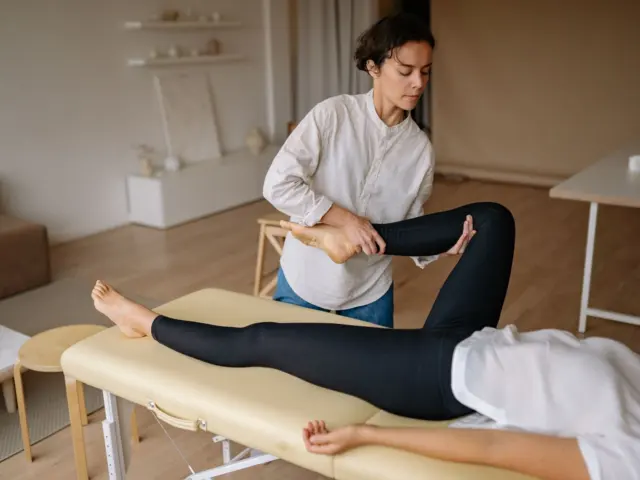
Quick answer: Pregnancy massage is usually done side-lying or semi-reclined with pillow support, by a therapist trained in prenatal work. Check with your doctor or midwife first if you have a high-risk pregnancy or an existing condition.
This guide covers safety, positioning, cautions and postnatal timing. For wider context on styles and what to expect from a session, see our overview of massage therapy and spa treatments.
Is pregnancy massage safe?
For many people it can be, but safety depends on your pregnancy, your health history and the therapist. A prenatal massage provider advises consulting your healthcare provider before starting, particularly if you have pre-existing conditions. Treat that conversation as the first step in the booking, not an optional extra.
Four decisions shape a safe, comfortable session:
- Medical clearance. Speak to your doctor or midwife before booking, and say so plainly at the consultation if anything about your pregnancy is complicated.
- Therapist training. Choose someone who works with pregnant clients as a normal part of their practice, not someone adapting a standard treatment on the day.
- Position and support. Insist on a setup built around pillows, so you are never lying in a way that puts pressure on your abdomen.
- Techniques. Ask which techniques will be used and which will be left out.
Early pregnancy and the first trimester
Many people look for pregnancy massage in the first trimester, often because tiredness or backache arrives early. The same rule applies from the start. Check with your doctor or midwife, tell the therapist how far along you are, and let them adjust the session around how you feel on the day. If you are unsure whether to book yet, waiting for that medical conversation costs you very little.
Choosing a therapist for pregnancy massage
Look for a therapist who is certified in prenatal massage, as that provider recommends. General massage qualifications do not guarantee experience with pregnant clients, so ask directly what prenatal training they hold before you book.
Studios that offer this work often present it as part of a wider service for women. One provider says its licensed massage therapists have experience working with women, including before and after birth. That kind of statement is a useful starting point, but your questions at booking matter more than the wording on a website.
- Ask about prenatal certification. A clear answer is a good sign; a vague one is a reason to look elsewhere.
- Ask about experience. Check whether pregnancy and postnatal clients are a regular part of the work.
- Ask about equipment. A therapist who works with pregnant clients will already have the pillows, wedges or table you need.
If you are comparing styles before choosing, read what is thai massage and ask any therapist how they adapt their approach for pregnancy.
Pregnancy massage positions and pillows
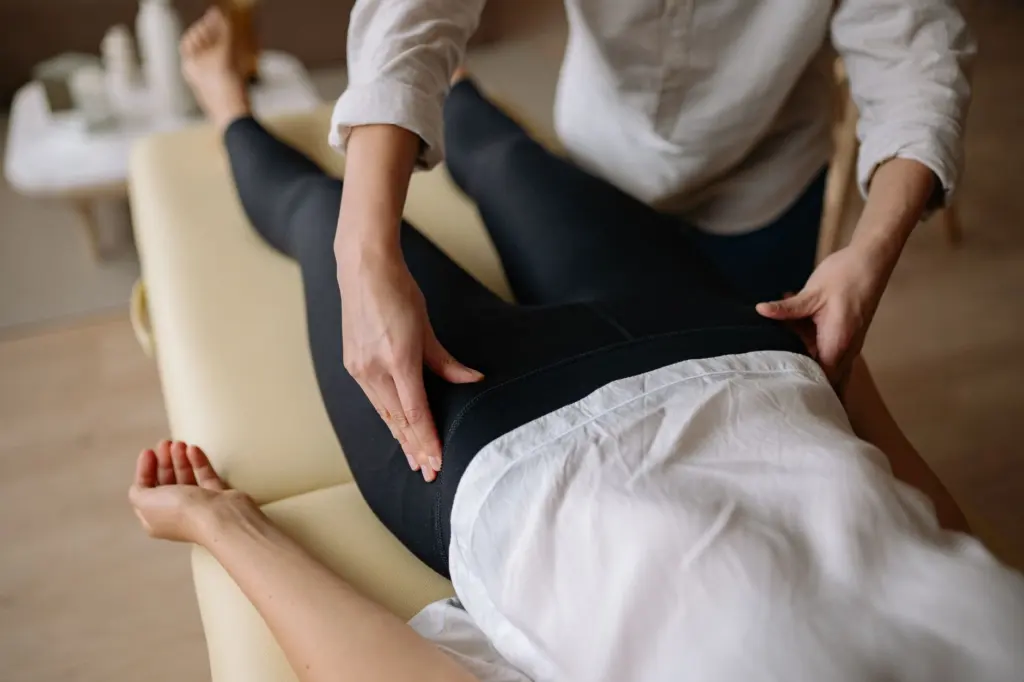
The standard answer to what positions are used is simple. One prenatal provider describes how you lie on your side or in a semi-reclined position, supported by pillows. The pillows do the work of keeping you stable and relaxed.
Side-lying position
The side-lying position suits most sessions because it lets the therapist reach the back, shoulders, hips and legs without asking you to lie flat. Pillows go where your body needs them, so you can stay still without effort. Choose it if you want a full-body treatment and find lying on your back uncomfortable.
Semi-reclined position
Semi-reclined means you are propped on an incline rather than lying on your side. It is worth asking for if side-lying puts pressure on a hip or shoulder, or if you want an arrangement that feels closer to resting in a chair. Tell your therapist which of the two feels better; they can change the setup between or during treatments.
Pillows, wedges and tables
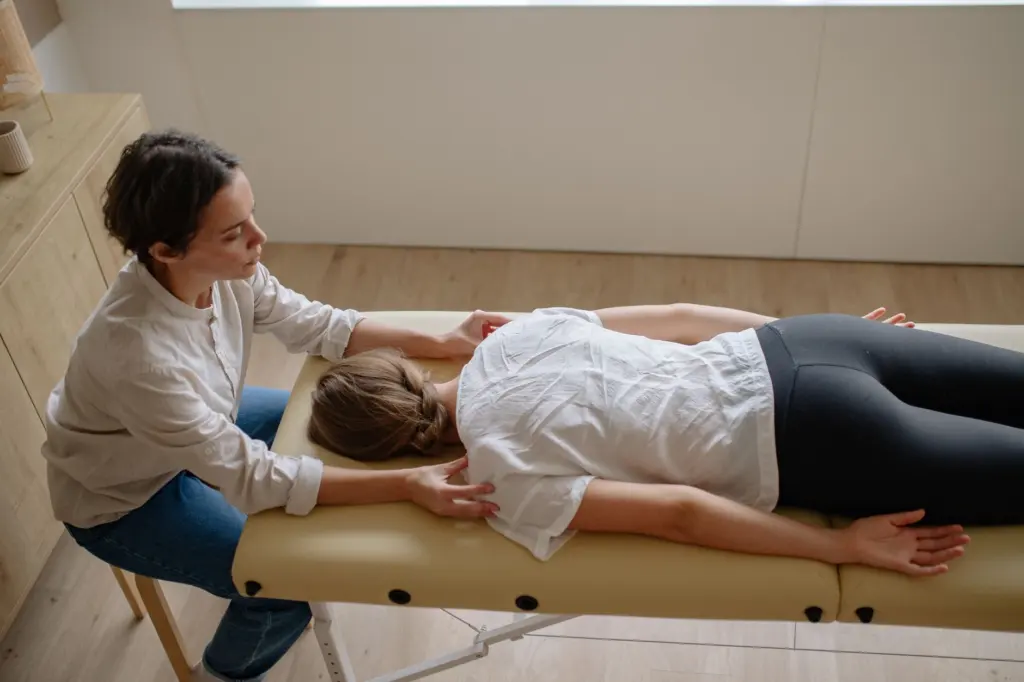
Pillows are not just for comfort. Your therapist will use supportive cushions and pillows to position you properly and relieve pressure, and that is the reason to ask for adjustments if anything feels pinched or heavy. Pressure on the abdomen or lower back is the sign to ask the therapist to reposition the pillows. Never put up with an uncomfortable setup.
Treatment areas and comfort
The lower back and hips are where many pregnant clients want attention, and the pillow setup is designed around easing pressure on the abdomen and lower back. Agree the areas to be treated before the session starts, and tell the therapist if any area feels sensitive.

Pressure is the second thing to agree. Ask the therapist to check in during the session and speak up the moment something is too firm. A good therapist expects this and adjusts without fuss.
When to avoid massage in pregnancy
Avoid booking until you have medical clearance if your pregnancy is high-risk. The same Houston-based prenatal guidance states it is crucial to consult your doctor before booking a prenatal massage in that case. Complete the consultation form honestly, because it is how the therapist learns about anything that changes the plan.
Some treatments are also off the table regardless of how well you feel. The table below sets out the cautions and what each means for planning.
| Situation | Direction | Planning use |
|---|---|---|
| High-risk pregnancy | Consult your doctor before booking | Get medical clearance first, then book. |
| Cupping on the lower back or abdomen | Not to be performed on any woman currently pregnant | Decline it if offered in a pregnancy session. |
| Preeclampsia or other blood-related conditions | Cupping is not appropriate | Tell the therapist about the diagnosis before treatment. |
These directions come from a prenatal massage FAQ and a provider’s treatment notes on cupping.
The table lists cautions for cupping and high-risk pregnancy specifically. It does not cover every condition, so your doctor or midwife remains the person to ask about your own situation.
Postnatal massage
Postnatal massage is massage for new mothers after birth, and the practical starting point is logistics. One provider says to come in as soon as you’ve figured out how to be away from baby for an hour or more. That could be about a week after birth or as late as 3 months afterwards, depending on how quickly you can arrange childcare.
That timing is a practical guide rather than a medical rule, so confirm with your midwife or doctor if you had any complications. Choose a provider whose therapists have experience with prenatal and postpartum care, because the demands of new motherhood differ from those of pregnancy.
Frequently asked questions
How often should I book pregnancy massage?
One provider suggests monthly or more until the last 4 weeks, then weekly until birth. Treat it as a guide and adjust it to your comfort, budget and your doctor’s advice.
Is a licensed therapist enough?
Providers describe their therapists as licensed and experienced with women, including postpartum care. The specific thing to ask about is certification in prenatal massage.
Do I need a special table for pregnancy massage?
Not necessarily. Therapists use special tables, full-length body pillows and wedges, or lean-on-side pillows, so the key is that your therapist has equipment for pregnancy positioning.