Booked a spa for the first time and unsure what happens? What to expect at a spa is simpler than it looks: check-in, a health conversation, a treatment where you stay in control, then time to unwind.
- Arrive early. Extra time covers changing, paperwork and a chat with your therapist, so the treatment itself is not squeezed.
- Say what matters. Allergies, pregnancy, recovery from surgery and skin concerns all belong in the consultation.
- Stay in charge. You choose how much to undress, you can ask for changes, and you can stop any service.
- Do not rush off. Time in the lounge afterwards is part of the visit.
If you are still choosing where to go, the best spas in london are collected in our London spa guide. The walkthrough below follows a visit in order, from the front desk to the lounge.
What a spa visit includes
A day spa is a place for treatments and relaxation rather than a single appointment. The trade group ISPA describes a spa as a place devoted to overall well-being through professional services that renew the mind, body and spirit, as reported by Above & Beyond Wellness. The same page says services usually include massage, skin care, body treatments and wellness sessions.
You decide how big the visit is. A visit can last 30 minutes or a full afternoon, depending on what you book, so a first-timer does not need to commit to a long day. Massage menus typically name several styles. One spa’s spa day menu lists Swedish, deep tissue and hot stone massage, which gives you a sense of the range you may be asked to choose from.
Arriving and getting settled
Plan to arrive before your appointment time, because the first minutes are for changing, forms and a short conversation. One first-visit guide suggests arriving at least 20 minutes early to change if necessary, fill out paperwork and talk to the therapist, according to Annie Wears It. Another suggests aiming for 15 minutes early on a first visit to complete intake forms, and 30 minutes if you plan to use the steam room or sauna first, per Spa Day Finder.
These figures differ by a few minutes, so treat the longer one as the safer choice if you are nervous. Choose the 30-minute window if heat facilities are part of your booking. Ask at reception whether sauna or steam room use is included, since that changes when you should walk in. For the booking side, see how to book a spa day.
Changing and lockers
Most first-timers are shown to a changing area, where you store your belongings and put on a robe if the spa provides one. Clothing choices are covered in what to wear to a spa day, so you can sort that before you leave home.
The consultation and health form
A consultation comes before your first treatment, and it covers your skin history, according to Above & Beyond Wellness. Expect the therapist or receptionist to ask about anything that affects what is safe or comfortable for you. Answer plainly, because the form is there to protect you rather than to test you.
Two points deserve extra attention:
- Allergies. Let your therapist know before you arrive and remind them on the day, as Annie Wears It advises. A reminder at the start of the appointment costs nothing and catches anything missed in the booking.
- Pregnancy or recovery. Check with your doctor before you book a facial, peel, laser, heat or firm-pressure service if you are pregnant or recovering, as the Above & Beyond Wellness page notes. Raise it at booking, so the spa can suggest something suitable.
In the treatment room
The treatment room is where most first-timer nerves sit, and the rules are in your favour. For a massage, you are asked to undress to your comfort level once the therapist has stepped out of the room, and you are covered with a sheet during the treatment, as Annie Wears It explains. What you keep on is your decision.
If something feels uncomfortable
You can speak up at any point. The same guide notes you have the right to end any spa service immediately for any reason. Small adjustments are even simpler to ask for, and the table below sets out the common ones.
| If this happens | What to do | Planning use |
|---|---|---|
| The heated massage table feels too warm | Ask the therapist to turn the heat down or off | Mention it early rather than enduring it |
| You are unsure how much to undress | Undress to your comfort level while the therapist is out of the room | Wear what feels right; the sheet covers you |
| You want to pause or stop altogether | End the service immediately; no reason is needed | Say so as soon as you feel unsure |
These points come from Annie Wears It’s first-appointment guide.
Therapists generally prefer to hear a request than to watch you tolerate something uncomfortable. If you are new to massage, a lighter style such as Swedish is a gentler starting choice than deep tissue, though the therapist can talk you through each option during the consultation.
After your treatment: lounge, sauna and steam room
The end of the treatment is not the end of the visit. Spas expect you to linger and relax, and unless they are closing soon there is no pressure to leave, according to Annie Wears It. That guide lists the sauna as one way to decompress afterwards.

The relaxation lounge is the quieter half of the experience. Some spas offer cosy fireplace lounges, and J. Sterling’s spa day page also lists infused water options such as cucumber mint or citrus. A lounge with a hot or cold drink is a good place to let a treatment settle before you head home.
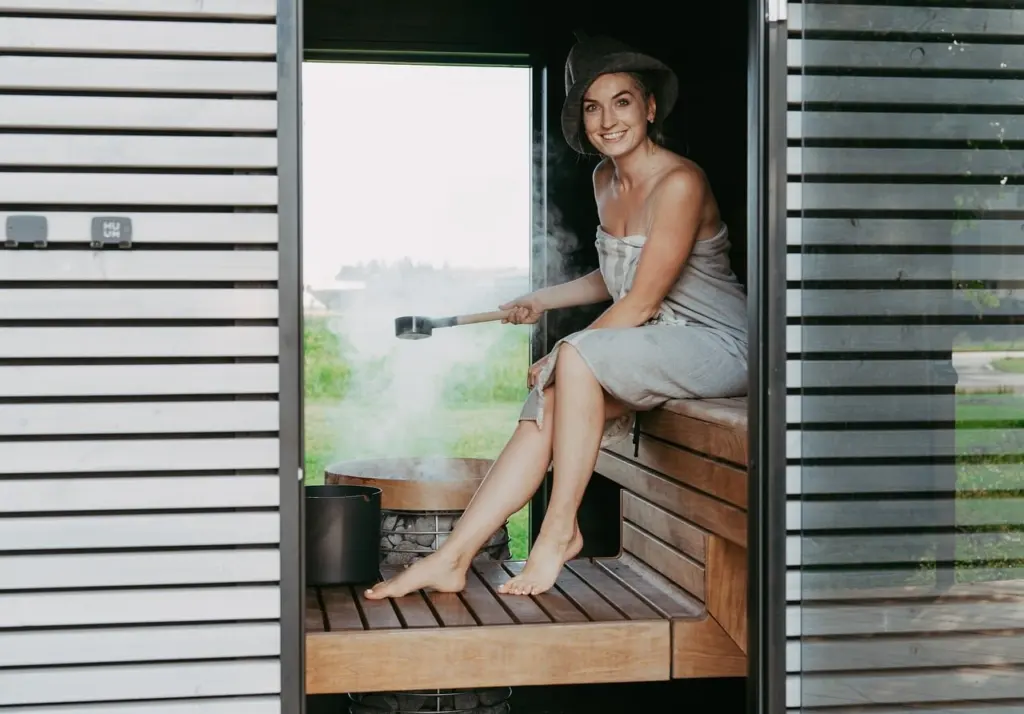
Treat the sauna and steam room as optional extras. If you have not used either before, start gently and leave as soon as you feel uncomfortable. If you have a health condition, apply the same doctor check as for heat treatments.


Is a spa day worth it the first time?
For most first-timers, yes, provided you book to suit your nerves rather than the full menu. The flexibility of the format is the reason: because a visit can be short, one well-chosen treatment plus lounge time gives you the main experience without a long commitment. A full day makes more sense once you know which parts you enjoy.
If a massage feels like a big first step, a shorter add-on is an easier way to try a spa. One spa lists single salt room visits of 10, 20 or 30 minutes at $30 to $50, according to Above & Beyond Wellness. That is one spa’s own pricing, so use it only as an example of how short visits can be.
Frequently asked questions
| Question | Answer |
|---|---|
| What happens if I arrive late? | Arriving late almost always shortens your treatment rather than extending the room’s booking, according to Spa Day Finder. Leave time in hand so you get the full session you booked. |
| What kinds of spa are there? | A spa can be a day spa, a hotel spa, a medical spa or a destination resort, as listed by Above & Beyond Wellness. A day spa is the usual first choice for a short visit. |
| What does a facial involve? | A spa facial cleans, exfoliates and hydrates your skin, and most include a facial massage, per the same Above & Beyond Wellness page. |
| How long does a massage last? | You choose the style and the length: 30, 60 or 90 minutes, according to Above & Beyond Wellness. A shorter slot suits a first try. |