Someone booking a spa day asks what is hot stone massage: heated basalt stones rested on the body and used by the therapist as massage tools, with the heat kept comfortable rather than burning.
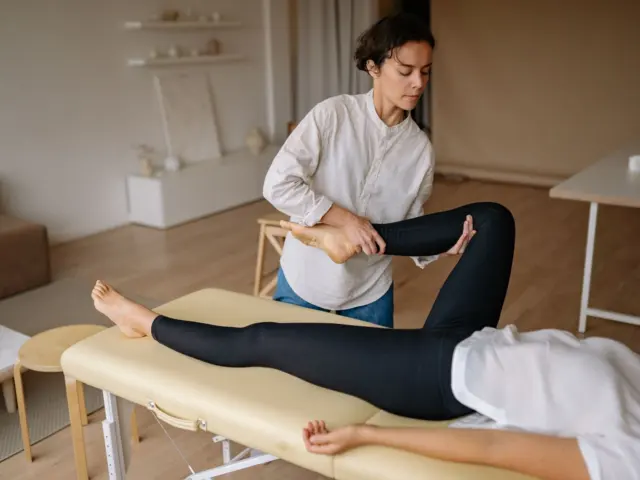
The treatment sits within the wider range of massage therapy and spa treatments. It is often misread as either a purely decorative spa extra or a risky heat treatment, and neither description holds up.
Hot stone massage in plain terms
Hot stone massage uses smooth stones that are warmed before they touch the skin. Therapists tend to work with smooth black basalt (volcanic) stones, which retain much of their heat throughout the treatment. Basalt’s high iron content gives it a high heat absorption and retention rate, which is the practical reason it suits the work.
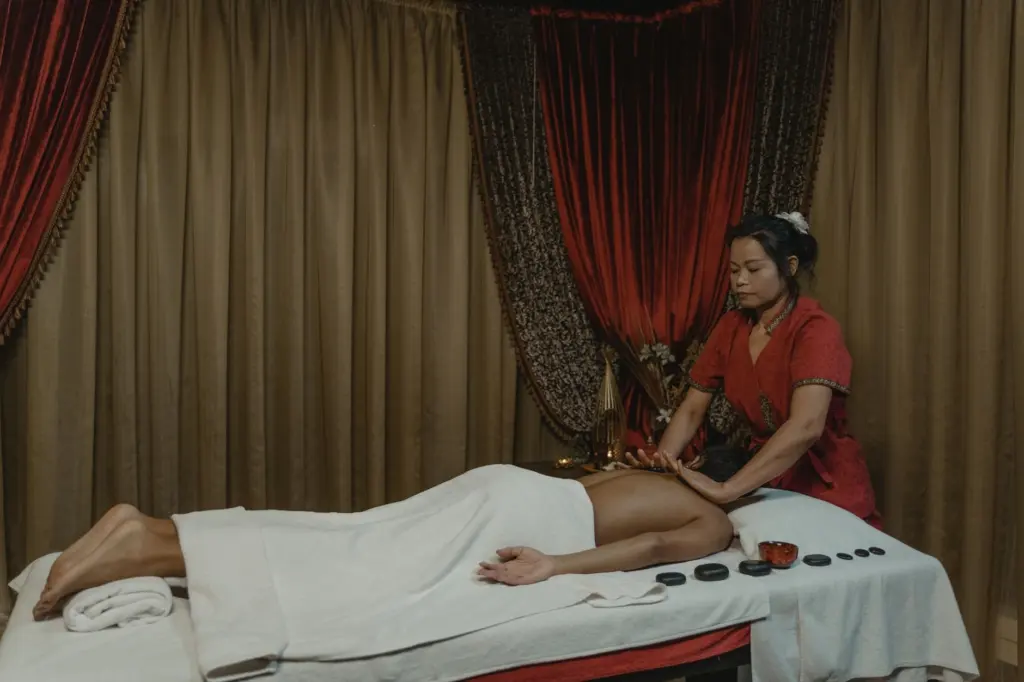
The technique has long roots. Many experts cited by the same chiropractic source believe hot stone therapy was first practised thousands of years ago in India, and it was “rediscovered” by Mary Nelson in 1993. That history explains the Ayurvedic flavour of some spa menus, but the modern session is a straightforward combination of warmth, oil and massage strokes.
Most confusion comes from a handful of assumptions, set against what the evidence supports below.
| Common assumption | What is supported | Planning use |
|---|---|---|
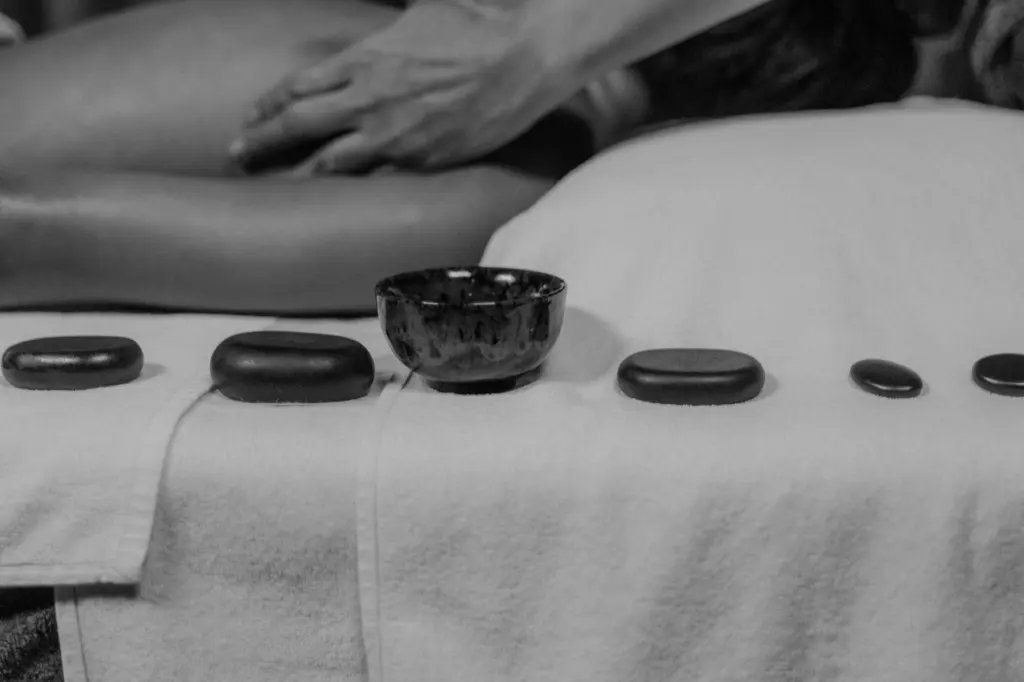
| The stones are simply laid on the body and left | Stones are placed on the body, and the warmed stones can also be held in the therapist’s hands and rolled or pressed on key areas. | Expect active massage work with the stones, not only resting heat. |
| Hot stones will burn | The stones are intentionally hot, yet they should not burn. They are heated in a water bath beforehand. | Tell the therapist straight away if a stone feels too hot. |
| Heat makes it a gentle, surface-only treatment | It uses both stones and pressure to reach deeper levels of tissue beneath superficial muscle layers, and warmer muscles allow deeper penetration. | Do not assume light pressure. Discuss the pressure you want. |
| Every stone is the same | Larger muscles call for larger stones. | Stone size follows the area being worked. |
These points come from Nava Center’s hot stone guidance and Chiro-Med’s history of the therapy.
How a session unfolds, step by step
The order differs between therapists, but the supported pattern runs from stone preparation through warm-up, oiling, placement and stone work. Understanding it removes most of the first-visit uncertainty.
- Stones are prepared. They are fully sanitized and heated in a temperature-controlled environment, normally immersed in water.
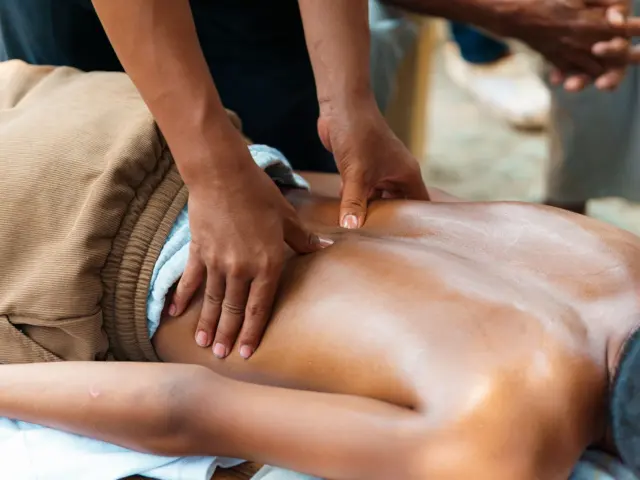
- The body is warmed first. The therapist may begin with a light massage to warm the body before the stones are placed.
- Oil goes on. Massage oil is used so the stones slide easily over the skin, and it is also common to use oil with stones to apply massage pressure around the body.
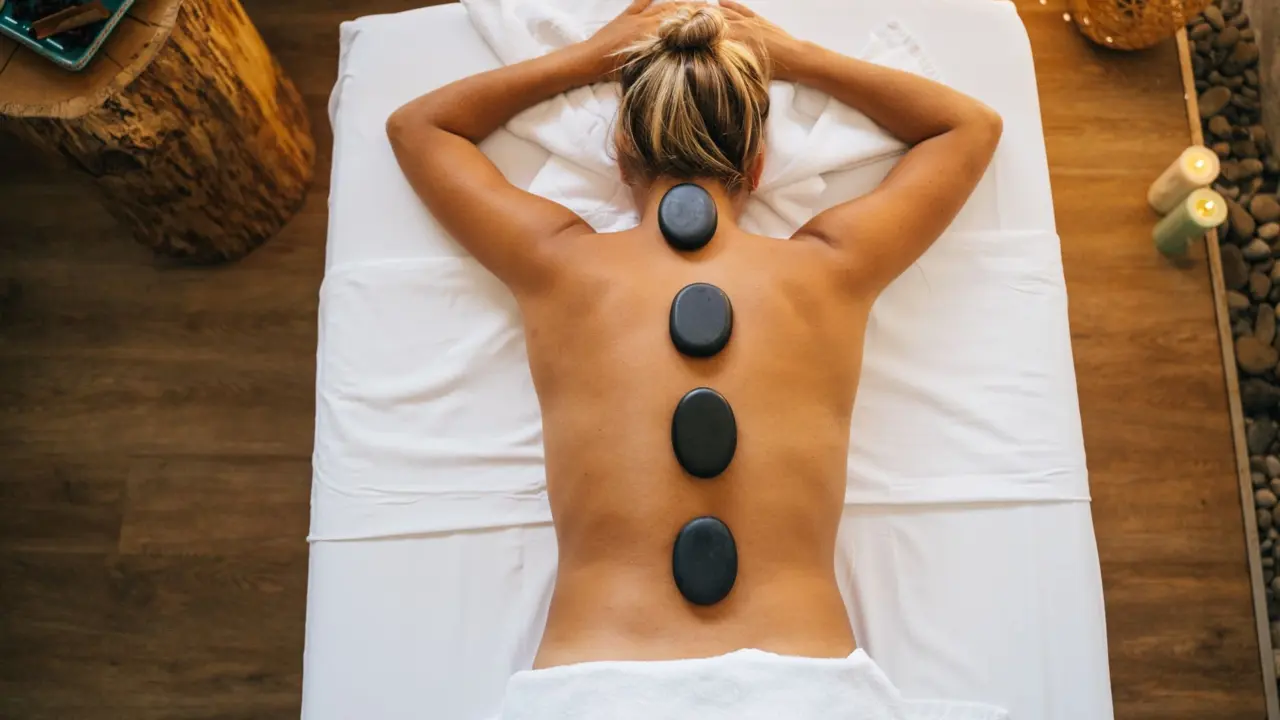
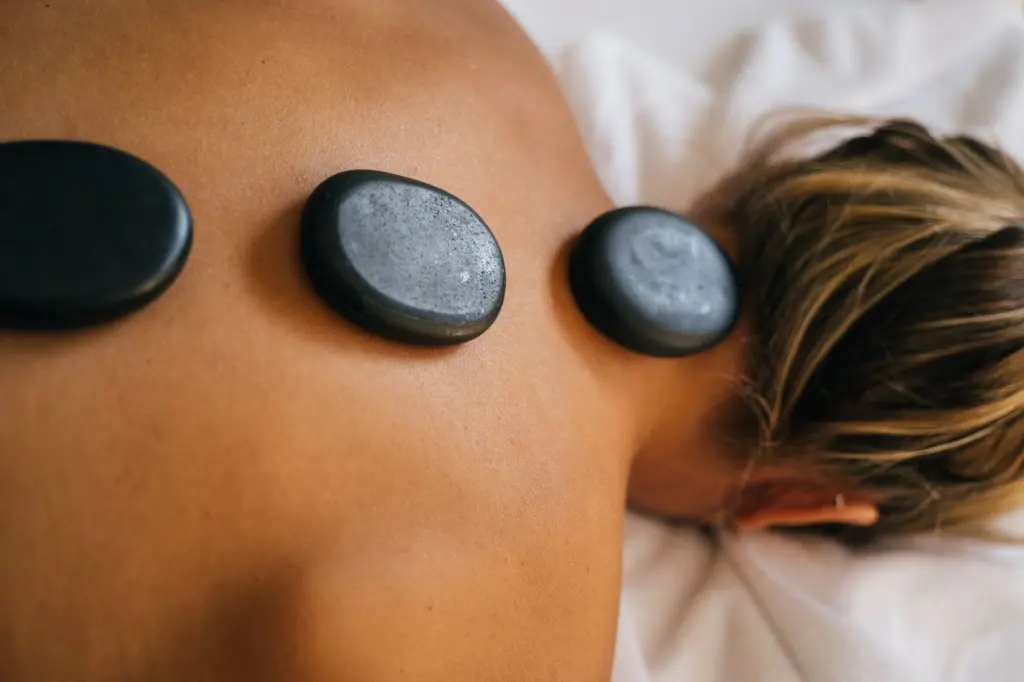
- Stones are placed. Some rest on set areas of the body, such as the back and spine.
- Stones become tools. The therapist holds warmed stones and rolls or presses them over key areas.
- Stones are swapped. Working stones are replaced with fresh hot stones, which can create short starts and stops in the flow of the massage.
The swapping step is the one clients rarely expect. According to Massage Studio Spa, therapists have to replace working stones with fresh hot stones, so brief pauses are a normal part of the rhythm rather than a sign of a problem.
Where the stones go and how they move
Stones appear in two roles: static weight and moving tool. W Centre lists the back and spine, palms, feet, décolletage and stomach as common placement areas. Resting stones on the back and spine let the warmth soak in while the therapist works elsewhere.
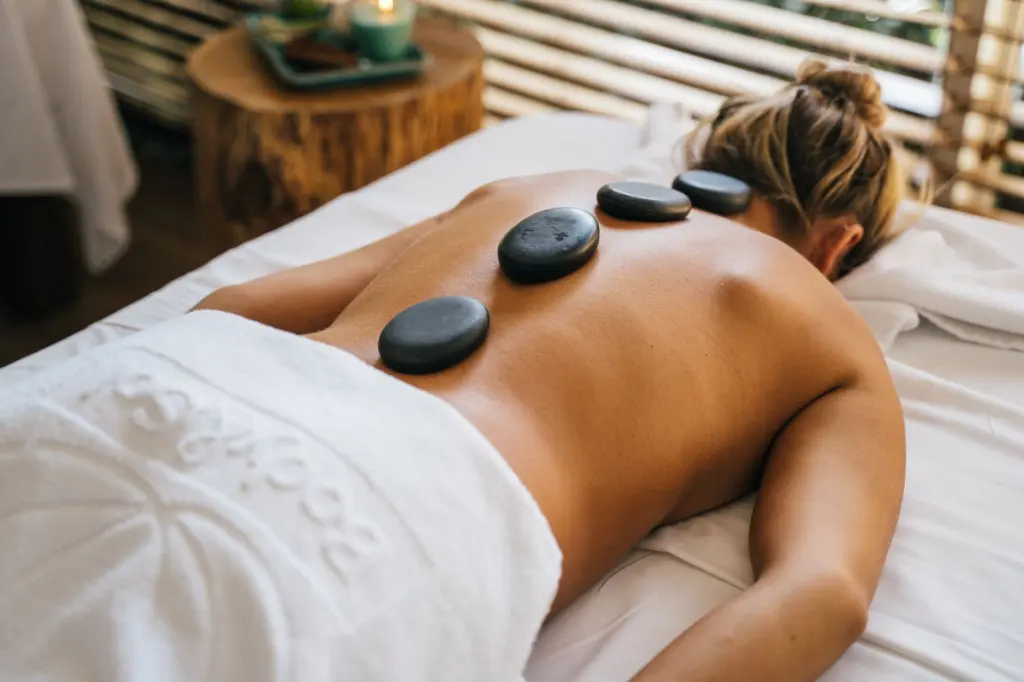
The moving role is what separates the treatment from simply lying under warm weights. The therapist holds smooth, warmed stones and rolls or presses them over key areas, with oil letting them glide. Because larger muscles call for larger stones, the stones used on the back are not the ones that suit the hands or feet.
Stone temperature and safety
The stones are meant to be hot, but they are not meant to hurt. According to Nava Center, therapists sterilize and heat stones to 120-150°F in a water bath. A stone warmer holding the stones in a temperature-controlled water bath is what keeps them within that range.
- Heating method. Water-bath heating keeps the temperature controlled, which matters because basalt holds heat so well.
- Burn risk. The stones are intentionally hot, yet they should not burn. Skin burns point to a stone that is too hot or has been left in place too long.
- Speak up early. Clients should tell the therapist about any discomfort so the stone can be moved, buffered or swapped. Do not wait to see whether it settles.
- Fresh stones. Replacing working stones with fresh ones means the stones in use are the ones heated for the session.
Treat the quoted range as a typical working figure rather than a guarantee for every studio. If a stone feels uncomfortable, the right response is a request to change it, whatever temperature the therapist intended.
Heat and muscle relaxation
Providers explain the relaxation effect through circulation. W Centre says heat helps increase blood flow to affected areas, allowing the muscle to release tension. Nava Center describes the same idea as improving circulation by expanding blood vessels.
Massage Studio Spa adds that a hot stone massage can decrease muscle spasm and tension and increase joint flexibility and circulation. These are explanations offered by treatment providers, so treat them as a reason the warmth feels relaxing rather than as a guaranteed outcome. Heat therapy of this kind suits clients who tense up under firm work, because warm muscles let the therapist work deeper with less resistance.
Hot stone versus deep tissue
Hot stone massage is heat-led, while deep tissue massage is the pressure-led comparison point. The two overlap in one respect: hot stone work also reaches below the surface layers, using both stones and pressure to access deeper tissue beneath superficial muscle.
- Route to depth. Hot stone work relies on warmer muscles allowing deeper penetration of muscle layers. Deep tissue work relies on the pressure itself.
- Feel of the session. Hot stone work has a warm, flowing quality with brief pauses while stones are swapped. Expect less interruption in a session that uses no stones.
- Choose hot stone when warmth is the main appeal or tight muscles resist firm pressure at the start.
- Choose deep tissue when the goal is concentrated pressure on specific areas and heat is not important to you.
If neither matches the goal, what is sports massage sets out a different style of treatment worth comparing.
Session length and booking choices
Longer sessions give the stones more time to cover the body. One studio’s advice, from Massage Studio Spa, is to opt for a 90-minute hot stone session over a 60-minute one because you feel the stones all over. That is one provider’s recommendation rather than a fixed standard, so confirm the length and what it includes when booking.
Heat is not right for everyone. People who are pregnant or managing a health condition should talk to their doctor or therapist before booking, and pregnancy massage covers that situation separately.
Frequently asked questions
| Question | Answer |
|---|---|
| What happens during a hot stone massage? | Warmed basalt stones are placed on areas such as the back, palms and feet and used by the therapist to massage with oil. Stones are swapped for fresh hot ones as they are used. |
| How hot are the stones? | Therapists commonly heat them to 120-150°F in a water bath, according to Nava Center. They are hot on purpose but should not burn. |
| How does hot stone massage compare with deep tissue? | Hot stone work uses heat, stones and pressure to reach deeper tissue. Deep tissue is the pressure-led alternative, so choose by whether you want warmth or concentrated pressure. |
| Is oil used with the stones? | Yes. Oil lets the stones glide over the skin and helps the therapist apply pressure with them. |