Standing in a spa wet area and weighing up a sauna vs steam room? Choose the sauna for hotter, drier heat and the steam room for cooler, near-saturated air. Check medical cautions before either.
This comparison also covers the hot tub, so you can decide before you arrive. For wider context on booking heat time alongside bodywork, see our guide to massage therapy and spa treatments.
Decision criteria before you pick a facility
Dry heat, wet heat and hot water suit different people, so work through these questions in order. The sections below give the detail behind each one.
- Heat tolerance. Decide whether you prefer very hot air or a lower temperature that feels heavy. The sauna runs hotter, while the steam room runs cooler but feels intense.
- Humidity. Think about how you cope with saturated air. A steam room is almost fully humid, while a sauna is comparatively dry.
- Sweating and breathing. Decide whether you want to sweat freely or prefer warm, moist air to breathe. The two facilities push you in opposite directions.
- Time available. Sessions are short rounds with breaks, not long soaks. Plan the number of rounds rather than one long stay.
- Health history. Pregnancy, recent heart events and low blood pressure change the answer, and may rule out all three facilities.
Sauna, steam room and hot tub side by side
The table compares the three facilities on the figures that affect comfort and safety. Treat the temperatures as typical, not as targets, and follow any limit the venue posts.
| Facility | Heat and medium | Typical temperature | Humidity | Session guidance | Planning use |
|---|---|---|---|---|---|
| Traditional Finnish sauna | Dry heat from rocks, electric heaters or wood-burning stoves | 150°F to 195°F (about 65°C to 90°C) | Low; about 10% if no water is added, above 60% when water is added | Average stays of five to 20 minutes; probably no more than 30 minutes at once | Choose it if you want hot, dry air and are comfortable with the highest temperatures |
| Steam room | Moist heat from boiling water | Usually 110°F to 120°F | Nearly 100% | Use the sauna limit as a cautious guide | Choose it if you prefer a lower temperature and warm, moist air |
| Hot tub or jacuzzi | Hot water around the body | Follow the venue’s posted limit | Not a deciding factor, because you are immersed | Follow the venue’s posted guidance | Pregnant women are advised to avoid it, as with saunas |
Temperature, humidity and session figures come from Good Housekeeping’s sauna and steam room guide, and heat sources from the University at Buffalo recreation team.
The sauna: dry heat
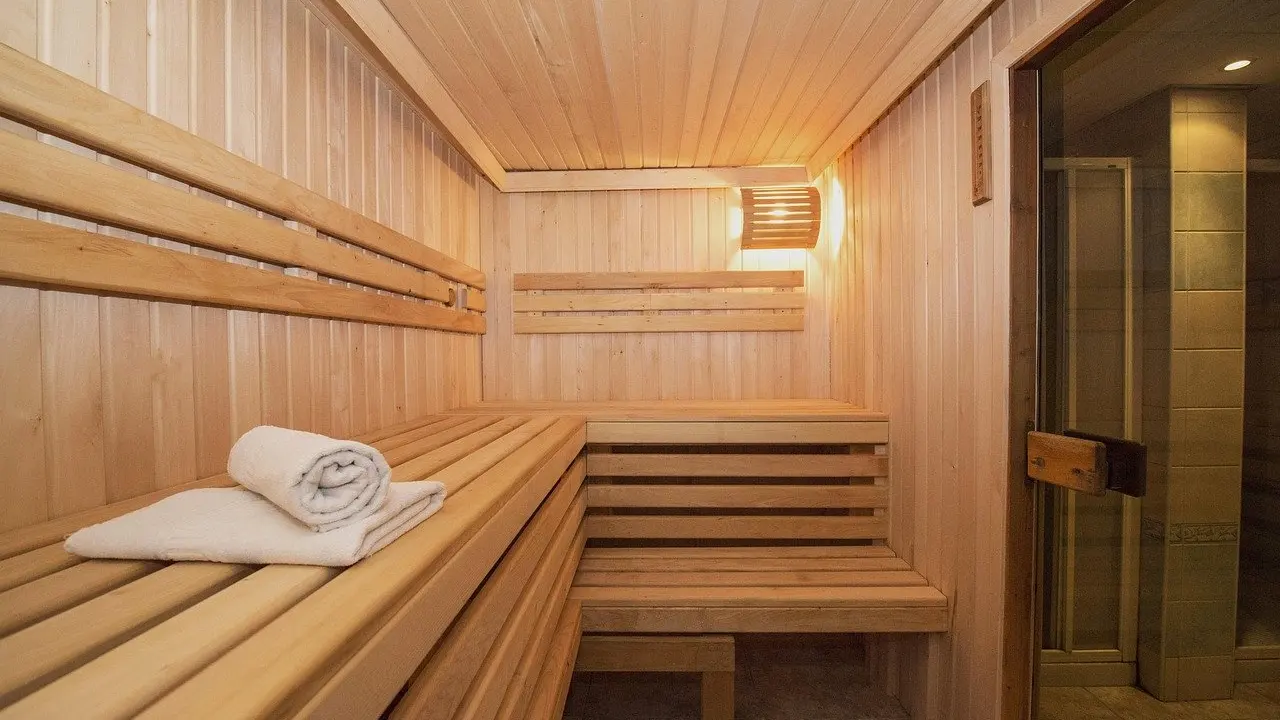
A sauna heats dry air, and the difference from a steam room starts with the heat source. The University at Buffalo’s recreation team notes that saunas use dry heat generated by rocks, electric heaters or wood-burning stoves, and that humidity stays low.
Finnish sauna temperature and humidity
Good Housekeeping puts a traditional Finnish sauna at 150°F to 195°F (about 65°C to 90°C). Humidity can stay around 10% if no water is added, and rises above 60% when water is added to the rocks. One sauna supplier’s comparison gives a wider 5–30% range for saunas in general, so humidity depends on the cabin and on how the person running it handles the stove.
If a sauna feels too fierce, a lower bench or a shorter round is the practical adjustment. A high-humidity sauna session is a different experience from a dry one, and venues set this by whether water is thrown on the rocks.
What a sauna suits
A sauna suits people who like intense, dry heat and want a structured round of heat and cooling. Good Housekeeping reports that regular time in a sauna may improve cardiovascular health, with benefits described as resembling those of exercise. That is a reason to use it regularly, not a reason to stay longer in any one session.
The steam room: wet heat
A steam room produces moist heat by boiling water, according to the University at Buffalo, and its humidity is nearly 100%. Good Housekeeping gives the usual temperature as 110°F to 120°F with 100% humidity, and Healthline says steam rooms are designed to hold humidity between 95% and 100%.
Why a cooler room can feel harsher
Steam rooms feel intense despite the lower temperature because of how the body copes. Good Housekeeping explains that dry saunas stimulate sweating, while steam rooms reduce our ability to sweat. Sweat cannot evaporate in saturated air, so heat builds up differently from a dry cabin. If you dislike heavy, humid air, start with a sauna.
What a steam room suits
A steam room suits people who find high sauna temperatures uncomfortable and prefer moist, warm air. It is a poor fit if you want to sweat hard, because the saturated air works against that.
Hot tub or jacuzzi vs sauna
A hot tub or jacuzzi heats you through hot water rather than hot air, so humidity does not decide the experience. Water temperature and time in the water do, and venues usually post a limit for both.
Choose the hot tub if you want warmth without dry air or steam to breathe. Choose the sauna if you want a hot, dry round. The cautions below apply across all three, and hot water does not make a facility gentler for pregnancy or heart conditions.
How long to stay in a sauna
Good Housekeeping reports that average sauna stays range between five and 20 minutes, and that you probably should not exceed 30 minutes at once. Treat 30 minutes as a ceiling, not a target. Beginners are better off at the short end of the range, with a break and a cool shower before any second round.

For a steam room, the sauna guidance is the safest guide, since no separate limit is given. Leave sooner if you feel unwell, and step out into cooler air.


Who should avoid saunas, steam rooms and hot tubs
Several groups should take extra care, or skip heat altogether. These cautions come from Good Housekeeping’s summary of medical advice.
- Pregnancy. ACOG and the American Pregnancy Association recommend that pregnant women avoid saunas and hot tubs because of a higher risk of dehydration.
- Recent heart attack or stroke. Steer clear if you had either within the last several months.
- Valvular heart disease. Conditions such as aortic stenosis are also on the list of cautions.
- Fainting or low blood pressure. If you have a history of either, be careful to avoid falls, including when you stand up after sitting on a hot bench.
If you are unsure whether a condition or medicine affects you, ask your doctor before booking.
What order to use spa facilities in
A sensible visit alternates heat with cooling and rest. Most experts recommend a warm shower before entering a sauna and a cool shower afterwards, according to Good Housekeeping.
- Shower warm. Rinse before you go in.
- Take one heat session. Use the sauna or the steam room, and keep it within the limits above.
- Cool down. Finish with a cool shower and a rest before choosing your next facility.
- Drink water. Good Housekeeping advises drinking water before, during and after every sauna session, and the same habit makes sense for steam rooms and hot tubs.

If your visit includes a treatment, our guides to what is swedish massage and trigger point massage explain what to expect from each.
Frequently asked questions
| Question | Answer |
|---|---|
| Is a steam room good for you? | Steam rooms warm the mucous membranes and encourage deep breathing, which may give temporary relief from congestion, according to Healthline. Clinical results on steam inhalation are mixed, so treat it as a comfort measure, not a treatment. |
| Do saunas and steam rooms raise your heart rate? | Yes. Healthline reports that heart rate increases in both. That is why the heart and blood pressure cautions above matter. |
| Do sauna health findings apply to steam rooms? | Not directly. Healthline notes that most studies focus on dry saunas, which typically have 5% to 10% humidity, and Good Housekeeping says there is not enough good-quality evidence directly comparing the two types. |