| Aspect | What is supported | Planning use |
|---|---|---|
| Pressure | Light pressure with slow, precise movements | Expect a gentle session. Do not book it for deep muscle work. |
| Sequence | Clearing with light rhythmic movements, then reabsorption toward the lymph nodes | Judge a therapist by whether the strokes are directed, not just soft. |
| Lymphoedema | Drainage is an important part of complete decongestive therapy | Treat it as one part of a treatment plan. |
| After surgery | Ask a doctor or lymphoedema therapist whether it is right for you | Get clinical clearance before booking. |
| At home | A certified lymphoedema therapist can teach self-manual drainage | Learn the routine from a professional first. |
The table draws on the Sarasota School of Massage Therapy overview and Tactile Medical’s lymphoedema guide.
What is lymphatic drainage massage? A gentle, rhythmic technique that uses light pressure and slow, precise movements to encourage lymph fluid to move. Pressure stays very light, and anyone with a medical condition or recent surgery should ask a doctor first.
If you are comparing it with other options, our overview of massage therapy and spa treatments shows where it sits among them. The sections below start with the decisions it affects, then explain how the technique works.
After surgery and with lymphoedema
Lymphatic drainage massage is most often considered when lymph flow has been disrupted, which is why surgery and lymphoedema dominate the questions people ask.
Timing after an operation
Whether lymphatic drainage massage is safe after surgery, and when it can start, is a clinical decision. It is not a rule you can look up. One medical spa states that patients must consult their doctor before starting any treatments, including massage. Tactile Medical gives similar advice and says to ask your doctor or lymphoedema therapist whether the technique is right for you.
In practice, that means three things. Do not book a session simply because it is light. Tell the therapist about your operation when you enquire. If your surgical team has not mentioned it, ask them directly.
Lymphoedema and decongestive therapy
When something disrupts the lymphatic system, fluid can stay in the tissues and cause swelling called lymphoedema. According to Tactile Medical, untreated lymphoedema can lead to pain, swelling, blisters, skin ulcers and infections. The same guide describes lymphatic drainage as an important part of complete decongestive therapy.
The practical point is that drainage is one element of a managed programme and is delivered by a certified lymphoedema therapist. If you have lymphoedema, start with that clinician rather than a general spa treatment. If you only want relaxation, a lighter spa-style session is a different decision.
Who should hold off
The safest rule is to get clearance before starting, because the supported guidance centres on asking a clinician rather than on a fixed list you can check yourself.
- Anyone not yet cleared by a doctor. The medical spa guidance quoted above is explicit that consulting your doctor comes before any treatment, massage included.
- People with skin problems. Tactile Medical says self-manual drainage may need modifying if you have skin ulcers, oedema blisters or other skin problems. Ask your therapist how to adapt it.
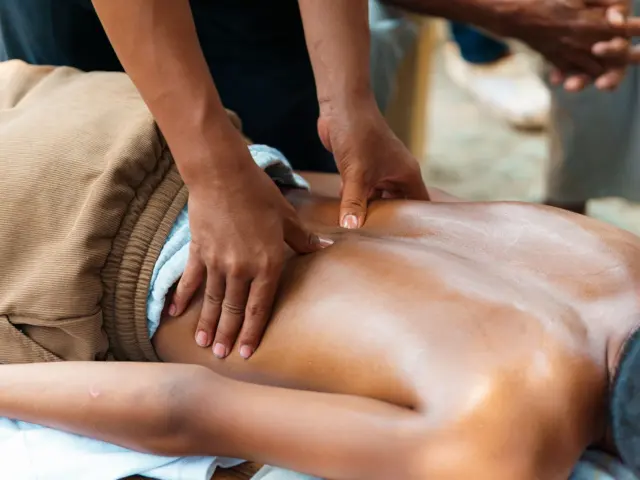
- Anyone expecting firm pressure. The technique is deliberately light, so it will not give the deep relief of firmer styles.
- Anyone planning to learn it informally. The same provider says this kind of massage should only be practised by trained personnel.
If your health history is complicated, a doctor or lymphoedema therapist is the right person to say whether it is ruled out for you.
Home self-care or a trained therapist
A therapist suits anyone with swelling, a surgical history or a medical condition. Home self-care suits a person who has been shown a routine and wants to maintain it. Tactile Medical says a certified lymphoedema therapist performs the treatment and also teaches self-manual lymphatic drainage for use at home. In that guide, each step of the home sequence is repeated 10 to 15 times, aside from deep breathing.

- Choose a therapist when you have lymphoedema, are recovering from surgery, or have skin problems that may change how the technique is done.
- Choose home care when a professional has shown you the sequence and confirmed it suits you. Home practice then supports, rather than replaces, professional care.
- Check training. The Sarasota School of Massage Therapy notes that many massage therapists pursue continuing education in lymphatic drainage after their foundational training and licensing. Ask a prospective therapist about their specific lymphatic training.
The American Massage Therapy Association’s self-care article describes the touch itself. Pressure is very light.

How the technique works
Lymphatic drainage massage works by moving lymph fluid along the body’s existing drainage routes using very light, directed strokes.
The lymphatic system is a network of vessels, nodes and organs. It returns lymph fluid to the circulatory system, according to Tactile Medical. Lymph nodes are the stations along that network, so the strokes are directed toward them. The same source describes manual lymphatic drainage as two steps. In clearing, a therapist uses light, rhythmic hands-on movements to move fluid. In reabsorption, the movements guide it toward the lymph nodes.

This is why direction matters as much as softness. The AMTA’s self-care sequence works through the main lymph node areas, with nine steps in all.
How it differs from other massage
The sharpest contrast is pressure and purpose. The Sarasota School of Massage Therapy says the modality uses light pressure and slow, precise movements, unlike deep tissue or sports massage. Those two are typically chosen for muscle work. Lymphatic drainage is chosen to support lymph flow.
Whatever style you compare it with, three features identify genuine lymphatic work. The touch is light and slow, the strokes are directed toward lymph nodes, and the aim is fluid movement rather than muscle release. For a wider comparison of styles, see our guide to the types of massage. If you are weighing it against another gentle, focused therapy, what is reflexology explains how that practice differs.
Frequently asked questions
Who can carry out lymphatic drainage massage?
Treatment for lymphoedema is performed by a certified lymphoedema therapist. Many massage therapists also add lymphatic drainage through continuing education after their foundational training.
What is lymph fluid made of?
Lymph fluid is part of the immune system and contains fat, water, protein, cellular debris and white blood cells, according to Tactile Medical.
How long does a self-care sequence take?
The AMTA says you can work the main lymph node areas in about 15 minutes, which suits the end of a working day.