Massage therapist qualifications begin with one decision: whether to try a taster or access course first or go straight to an accredited course. Whichever you choose, check the anatomy teaching, practical assessment and insurance before paying.
This guide sets out how the training stages fit together, what courses teach and how to compare them. For the step-by-step route from first class to paid work, read how to become a massage therapist uk.
Choosing your starting point
The first choice is how much to commit before you know whether hands-on work suits you. City Lit’s guide to becoming a massage therapist in London recommends beginning with a taster or access course before an accredited course. It also describes a range of courses from complete beginner to accredited level. That order is sensible because a short course shows whether you enjoy the physical work, the theory and the client contact before a full qualification asks for months of all three.
- Choose a taster or access course if you have never studied massage. It is the lowest-risk way to test your interest, and it shows you how a class is run before you pay for a longer programme. A beginner massage course covers this stage in more detail.
- Go straight to an accredited course if you have already decided to work with clients. A taster would only delay you, so spend your time comparing providers on the criteria below.
- Wait before enrolling if you cannot attend practical sessions regularly. Hands-on assessment depends on being in the room, and attendance rules can decide whether you complete at all.
Criteria for comparing courses
Whichever route you take, the same questions separate a solid course from a thin one. Ask each provider for answers in writing before you pay a deposit.
- Awarding body. Ask which organisation issues the certificate, and what the qualification is called on it. The awarding body is what gives the certificate its standing with employers and insurers.
- Anatomy and physiology teaching. Look for named modules rather than a vague promise of “body knowledge”. The next sections show what a properly taught subject looks like.
- Assessed practical work. A course should have you practise on real people and be marked on your technique, not only on a written paper.
- Supervised experience. Placements and volunteering are where routines become confident treatments.
- What the fee includes. Student insurance, exam preparation, materials and any extra assessment fees all change the real cost.
- Delivery format. Check where classes happen, how they are scheduled and what happens if you miss a session.
How massage therapist qualifications fit together
A massage qualification is a certificate awarded by an awarding body and delivered by a college or training provider. ITEC is one such awarding body. City Lit, the London adult-education provider, says it has a close relationship with ITEC, and its accredited massage courses are built around that qualification.
This split between awarding body and provider matters when you compare courses. Two providers can both teach massage, yet only one offers a certificate that comes from a recognised awarding body. A provider’s own attendance certificate is a different thing. Ask for the exact qualification title, the awarding body and the level, and check that they match what the provider’s marketing says.
Accredited courses and entry-level courses
Entry-level courses introduce basic technique and are the right place to find out whether you like the work. Accredited courses add assessed theory and practice, and they lead to the certificate you use when you seek insurance or professional registration. City Lit describes no specific prior learning as a barrier to starting, which means an accredited route is open to a motivated beginner as well as to someone who has done a taster.
Choose an accredited course when you intend to treat the public. Choose an entry-level or taster course when you want a hobby skill, such as giving a partner a back massage, or when you are still deciding.
Why the level and body matter to clients and insurers
Clients rarely read specifications. Insurers and registers do, and they ask what you studied, for how long and with whom. Keep your certificate, any transcript and the course outline in one folder from the first day. Replacing a lost record years later is far harder than filing it now.
Anatomy and physiology: the core of every course
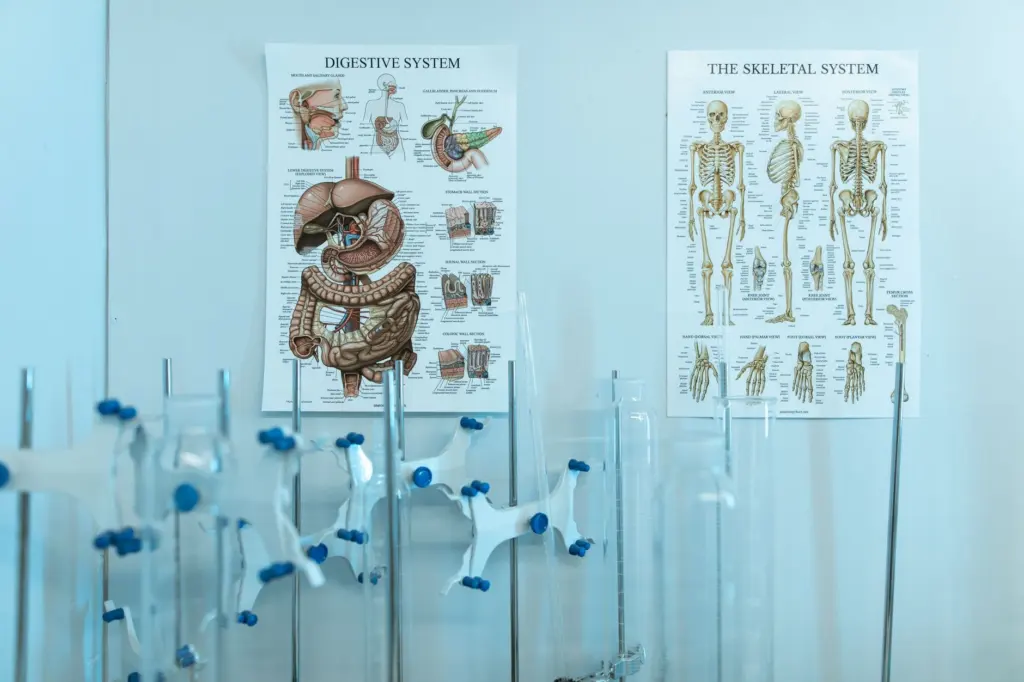
Anatomy and physiology is the subject that separates massage therapy training from a basic relaxation class. It teaches you which structures lie under your hands, how they normally work and what is unsafe to treat. City Lit’s example course ran over a period of 4 months and included modules on anatomy, physiology and pathology, so the three subjects sit together in the teaching.
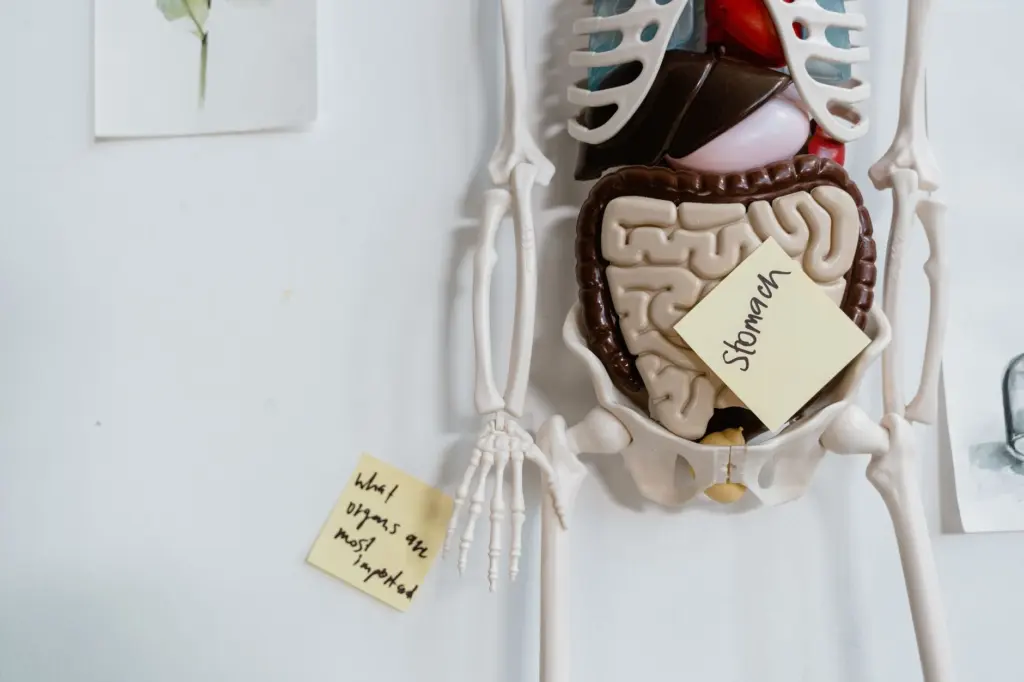
Published hour counts show how much weight providers give the subject. In Illinois, the New School of Massage lists a typical anatomy and physiology allocation of 125–150 approximate hours within a state-approved programme of 600 hours. An Alabama school’s FAQ, published on Massaged Life, describes 100 hours of anatomy and physiology, including 35 hours of myology, inside a minimum of 650 hours of approved education. Myology is the study of muscles, so the Alabama breakdown shows how much of the subject concerns the tissues you will actually work on. These are United States figures, not UK requirements, but they are useful yardsticks when a UK course is vague about how much time anatomy gets.
When a provider quotes UK course content, ask for the same breakdown: which hours are anatomy, which are physiology and which are pathology. If you want a deeper look at what the subject involves, anatomy and physiology for massage therapists goes through it in detail.

What a massage course teaches
A massage course teaches body knowledge, hands-on technique and professional practice, usually in that order of emphasis. City Lit says a typical class begins with theory and is followed by practical skills. That rhythm is worth expecting from any provider: you learn why before you learn how, then practise on classmates.
Theory subjects
The CHAC massage therapy programme lists anatomy, physiology and pathology, plus kinesiology, patient management, and business, ethics, health and hygiene. It also has dedicated modules for anatomy and physiology and for sports massage therapy. Kinesiology is the study of movement, which helps you understand why a client’s shoulder tightens when they work at a desk. Pathology tells you when massage is unsuitable and a client should see a doctor first.
Practical technique
Practical teaching covers positioning, pressure, draping and treatment sequences. Avenue Five’s FAQ says its Texas basic course teaches anatomy, health, hygiene, business practices, ethics and kinesiology, and that the curriculum includes Asian and Swedish massage plus CPR. The balance between modalities differs by provider, which is why it pays to read the module list, not only the course title. If a Western relaxation technique is your goal, a swedish massage course is the usual foundation to look at.
Professional practice
Business, ethics, health and hygiene appear in the CHAC curriculum because treating clients is a professional relationship as much as a physical skill. Expect lessons on consent, record keeping, boundaries and keeping your workspace clean. A course that skips these topics leaves you able to massage but not able to run a practice.
Course lengths and how to compare them
Course length varies widely, and the number on its own tells you little unless you know what the hours include. The two published examples below show the contrast between a short London course and a long, fully on-campus diploma that counts clock hours.
| Course | Published length | Content and conditions | Planning use |
|---|---|---|---|
| City Lit massage course (London) | 4 months | Modules on anatomy, physiology and pathology; each class opens with theory, then practical skills; in person at the London Wellbeing Centre | Suits learners who want a spread-out course in the UK capital and can attend in person |
| CHAC massage therapy diploma | 800 clock hours over 36 weeks | Includes a 240-hour externship in a real treatment setting; taught fully on campus | Shows what a full-time, placement-heavy programme looks like when comparing UK options |
Figures are drawn from City Lit’s guide and the CHAC programme page.
Reading hours, weeks and months together
A duration in months says how long the course runs, but not how many hours you will actually spend learning. A duration in clock hours tells you the teaching load but not how spread out it is. Ask providers for both, plus how many hours are classroom, practical and self-study. When comparing a London course measured in months with an American diploma measured in clock hours, treat the hours as a measure of depth and the months as a measure of pace.
Benchmarks from other training systems
Several US sources show how much training is expected where licensing is set by hours. Illinois requires 600 hours from a state-approved massage therapy programme, according to the New School of Massage. Avenue Five says Texas requires 500 hours of education plus 50 hours of internship before a written and practical exam, and that all 500 hours must be submitted on a transcript (Avenue Five). Alabama asks for a minimum of 650 hours of approved massage education, as set out by Massaged Life.
These are ceilings and minimums for specific US states, not UK rules. Use them as a sense check: a course advertised as complete professional training that is far shorter than these benchmarks deserves a closer look at what it leaves out.
Attendance and assessment conditions
Completing a course means meeting its attendance conditions as well as passing assessments. CHAC states that certification through CAMTC requires 100% of total clock hours, and that more than eight absences may disqualify a student. Whatever the UK provider’s own rules, read the missed-session policy before enrolling. If your work pattern is unpredictable, a course that lets you make up sessions is worth more than a cheaper one that does not.

Practical experience and placements
Supervised practice turns classroom technique into treatment skill, and it is the clearest difference between a certificate and readiness to work. The CHAC diploma builds in a 240-hour externship in a real treatment setting. City Lit says it has links with probably around 40 different charities and hospitals where students can volunteer.
When you compare providers, ask three practical questions. Does the course arrange placements or leave you to find them? Are placement hours counted towards the qualification or extra? Who supervises you? Charity and hospital settings expose you to clients with varied needs, which builds the consultation and adaptation skills that practising on classmates cannot.

Specialist courses after your foundation
Specialist courses add a modality or client group to a foundation skill set. Choose one after a general course, once you know which clients you want to treat. The CHAC curriculum places sports massage therapy as its own module alongside anatomy and physiology, which shows how a general programme can lead into a specialism.
- Sports massage. Suits therapists who want to work with active clients and who have a solid anatomy base. A sports massage course uk is the common next step for that route.
- Deep tissue work. Suits those who want to refine pressure and technique for chronic tension. Compare options for a deep tissue massage course.
- Heat and stone work. Adds equipment handling and temperature safety. A hot stone massage course is a typical add-on for spa work.
- Seated and head-focused treatments. Suit corporate and event settings where a couch is impractical. See the indian head massage course options.
- Client-specific training. Courses such as a pregnancy massage course uk exist because some clients need adapted technique and extra knowledge of contraindications.
- Complementary approaches. An aromatherapy massage course or a thai massage course london broadens what you can offer, and each draws on a distinct tradition.
- Face and partner work. A facial massage course focuses on a single area in depth, while a couples massage course teaches treatments designed for shared sessions.
Do not stack specialisms before you have a foundation. Each one leans on anatomy and pathology knowledge, so the foundation course gives every later course more value.
Training part-time in London
Yes, you can train in London on a schedule that fits around other commitments if you pick the right format, though you should confirm session days before enrolling. City Lit runs its massage courses in person at the London Wellbeing Centre, so there is no remote option for the practical element. Its example accredited course ran across 4 months, a pace that suits people who work or care for others alongside study.
City Lit’s guide makes clear that courses start at beginner level, which means you can enter without prior learning and progress to accredited level in steps. For a wider view of providers across the capital, see massage courses london.
Before you commit, ask for the timetable in writing: which days, which hours and whether missed practical sessions can be made up. A course that fits your week on paper but not in practice is the most common reason learners drop out.
Insurance, registration and starting to practise
Professional insurance is part of being ready to treat the public, and it follows from proof of training. In Illinois, a therapist without certification cannot offer services, work in a clinic or even purchase liability insurance, according to the New School of Massage. That is a US rule, but it shows the pattern: insurers look for a recognised qualification before they cover you.
Student cover during training is a separate matter, and some providers include it in the fee. The details of cover, what to buy and how registration fits in are covered at massage therapist insurance uk. Registration with a professional body such as the Complementary and Natural Healthcare Council (CNHC) is the next step to check once you hold your certificate.
A route from first class to client work
- Try a taster. Book a short class to confirm the work suits you.
- Enrol on an accredited course. Confirm the awarding body, module list and attendance rules before paying.
- Build supervised hours. Use placements or volunteering to practise on varied clients.
- Add a specialism. Pick one that matches the clients you want.
- Insure and register. Keep your certificate and records ready for both applications.
Frequently asked questions
Do I need previous experience before enrolling?
No specific prior learning is required to start at City Lit, which offers courses from complete beginner to accredited level. Its guide still recommends a taster or access course as the first step.
Do hours from separate short courses add up?
Not always. In the Texas example from Avenue Five, all 500 hours must be submitted on a transcript and continuing education does not count. Ask any UK provider and insurer whether earlier short courses are credited.
Is student insurance included in tuition?
It can be. One Alabama school lists student massage insurance and exam preparation within its tuition. Ask each UK provider whether student cover is included and whether it ends when the course does.
Are the US course hours the standard in the UK?
No. Illinois, Texas and Alabama figures come from US state systems. Use them only as benchmarks when judging how deep a UK course goes.